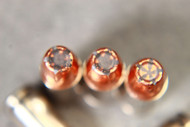
Glock Ammo Matchmaking
Posted by The Dude on Sep 28th 2026
Glock Ammo Matchmaking
115 vs. 124 vs. 147gr, standard pressure vs. +P, carry vs. competition, compensators, recoil springs, primer sensitivity, ejection patterns, point of impact and why ammunition becomes part of the operating system once you start changing the gun.
IronKells Armory | Glock | Ammo & Function
People spend hundreds of dollars changing a Glock and then treat ammunition like it's completely separate from the build.
It isn't.
Change the recoil spring, slide weight, striker spring, barrel, compensator or suppressor and ammunition suddenly becomes part of the tuning equation.
We've had Glocks that would eat damn near anything.
We've also had tuned guns where changing from one 9mm load to another noticeably changed ejection, dot tracking, slide speed, felt recoil and ignition reliability.
That doesn't mean you build a fragile gun that only survives on one magic box of ammo.
It means you understand what ammunition is doing before blaming the pistol.
“The gun, spring, comp and ammo don't know they're separate products. Once you pull the trigger, they're one system.”
The Fast Summary
115gr: generally gives a quicker, sharper recoil feel. Quality full-power 115 can run extremely well, including through plenty of compensated Glocks.
124gr: our favorite all-around baseline. Good balance of slide energy, recoil feel and useful muzzle pressure for a broad range of setups.
147gr: generally feels more like a slower push. Popular for competition and suppressed shooting, but not every 147 load drives a comp the same way a hotter 124 does.
+P: useful in some setups, especially when you want more operating margin or useful gas for a comp. Expect more recoil, blast and wear than standard-pressure ammunition.
Compensated guns: generally reward ammunition with useful muzzle pressure, but a modern micro comp does not automatically require hot ammo.
Competition: power factor, recoil feel, reliability and sight tracking matter more than simply buying the weakest load possible.
Carry: reliability comes first. Test the exact ammunition in the exact configuration you're actually going to use.
Modified ignition system: ammunition that exposes a reduced-power striker spring isn't automatically “bad ammo.” Your gun may simply have less ignition margin.
Bullet Weight Is Only Part of the Story
People talk about 115, 124 and 147 like bullet weight alone determines how ammunition behaves.
It doesn't.
Two 124gr loads can feel and function completely differently because of:
- Velocity
- Pressure
- Powder burn characteristics
- Bullet profile
- Overall cartridge dimensions
- Primer
- Case dimensions
That's why “my Glock hates 115” isn't enough information.
Which 115?
115gr — Fast, Common & Sometimes Misunderstood
115gr is everywhere.
Cheap range ammo, full-power practice ammunition and premium loads can all use the same bullet weight while producing very different slide behavior.
A quality full-power 115gr load can:
- Cycle a stock Glock perfectly
- Run a micro comp perfectly
- Produce strong ejection
- Give a quick recoil impulse that some shooters prefer
Weak bulk 115 is where some marginal setups start showing themselves.
Add a big comp, heavy recoil spring or extra friction and the same pistol that runs hotter ammunition may begin:
- Dribbling brass
- Stovepiping
- Short-stroking
- Failing to lock back
That's not proof 115gr is bad. It's evidence that the particular load may not provide enough operating margin for that setup.
124gr — Our Favorite Baseline
If we're trying to establish a baseline for a 9mm Glock, we like 124gr.
Not because there's anything magical about 124 grains.
It just lands in a useful middle ground:
- Enough operating energy for most normal setups
- Good availability
- Good training options
- Excellent defensive options
- Useful behavior with compensators
- Recoil impulse most shooters handle well
Speer currently lists standard-pressure 124gr Gold Dot at 1,150 fps from its 4-inch test barrel and its 124gr +P at 1,220 fps.
That's a good real-world example of why the words 124 grain don't tell you how energetic the load is.
Same bullet weight. Different operating behavior.
147gr — The Heavy-Bullet Feel
147gr tends to feel different.
Instead of the sharper impulse many people associate with lighter bullets, heavier standard-pressure ammunition often feels more like a slower shove.
That's one reason 147gr has always been popular for:
- Competition
- Suppressor use
- Shooters who prefer the heavy-bullet recoil feel
- General practice
Don't confuse slower bullet velocity with weak slide operation.
A properly loaded 147 can provide plenty of recoil impulse and cycle extremely reliably.
But a lower-pressure 147 may not work a compensator as aggressively as a hotter 124gr load because the comp also cares about the gas available at the muzzle.
Cycling the gun and working the comp are related questions, but they aren't exactly the same question.
115 vs. 124 vs. 147 — Practical Starting Point
| Weight | General Feel | Where We Like It |
|---|---|---|
| 115gr | Quicker / sharper impulse depending on load | General range use, full-power practice, some comp setups |
| 124gr | Balanced / middle ground | Our general baseline, carry, training, compensated guns |
| 147gr | Slower push / heavier impulse feel | Competition, suppressed shooting, general training, carry when the load is proven |
Those are tendencies — not laws of physics printed on the box.
Standard Pressure vs. +P
+P simply means the ammunition is loaded to a recognized higher-pressure specification than normal standard-pressure ammunition.
In practical use, that commonly means:
- Higher velocity
- More recoil impulse
- More muzzle blast
- Potentially more useful gas for a compensator
- More stress on the firearm than an equivalent standard-pressure load
Glock currently says ammunition meeting applicable industry standards should be used and acknowledges that some +P ammunition meets those standards.
It also specifically warns that +P+ generally does not.
So we're not treating +P+ as some normal tuning tool in this Forge File.
Compensators Change What We Want From the Ammo
Compensators like useful muzzle gas.
That's why a hotter 124gr load can make the same comp feel noticeably more effective than a soft 147gr target load.
But don't turn that into:
“Comp = must use +P.”
We've already covered modern micro comps that run ordinary 115 and 124gr ammunition with factory recoil systems just fine.
The bigger and more aggressive the comp becomes, the more ammunition choice tends to matter.
Our basic hierarchy is:
- Micro comp → broad ammo window
- Mid-size comp → ammo starts mattering more
- Large competition comp → ammo becomes an actual tuning variable
For the full breakdown, see the Glock Compensator Guide.
Ammo & Recoil Spring Weight
This is where the matchmaking becomes obvious.
A recoil spring is resistance the slide has to work against.
If the ammunition and setup do not produce enough useful slide travel against that resistance, you may see:
- Weak ejection
- Stovepipes
- Short-stroking
- Failure to pick up the next round
- Failure to lock back
That's why softer competition loads often pair well with 13–15 lb aftermarket recoil springs in guns designed around tunable single-spring systems.
It is also why we don't automatically take the spring that works beautifully with soft match ammo and assume it's our favorite setup for hotter ammunition too.
For spring weights and slide-timing clues, see Glock Recoil Spring Tuning.
Watch the Brass
Ejection tells us a lot about how the ammo and gun are getting along.
| What the Brass Does | What It May Be Telling Us |
|---|---|
| Dribbles near the gun | Low operating margin, soft ammo, spring too heavy for setup, friction |
| Consistent healthy ejection | Ammo / spring / slide combination is probably in a comfortable window |
| Changes dramatically by ammo brand | Believe the ammo difference before replacing the extractor |
| Wild / erratic pattern | Ammo consistency, extractor/ejector, spring setup or grip deserve attention |
| Very aggressive ejection | Hotter ammo / faster slide velocity may be part of the picture |
Ejection isn't a laboratory pressure gauge. It's a clue.
Primer Sensitivity Becomes Important After Trigger Tuning
A factory-style ignition system gives you a lot of primer margin.
Start reducing striker spring weight and the ammo suddenly gets another vote.
We've run competition Glocks with light striker springs for very high round counts successfully.
We've also seen ammunition with more demanding primers expose a marginal ignition setup that had been perfectly happy with another load.
That's why a competition pistol can be extremely reliable while still being more ammunition-sensitive than a stock carry gun.
For that problem specifically, see Glock Light Primer Strikes.
Carry / General-Purpose Ammo
For a serious-use Glock, we want boring reliability.
Use high-quality, factory-loaded ammunition from a reputable manufacturer and make sure that exact load works in the exact gun.
Common modern service-grade 9mm choices include loads in the:
- 124gr standard-pressure range
- 124gr +P range
- 135gr / 135gr +P range
- 147gr standard-pressure range
Federal currently offers HST in 124gr, 147gr and 124gr +P configurations.
Speer's current Gold Dot catalog includes 124gr, 147gr and 124gr +P 9mm offerings.
Hornady's 135gr +P Critical Duty is another current full-power service-oriented load.
We don't need to declare one universal winner.
The load that matters is the quality load that your particular pistol feeds, chambers, ignites, extracts and shoots predictably.
What We Want a Carry Load to Prove
- Feeds from every carry magazine
- Chambers correctly
- Ignites reliably
- Extracts and ejects consistently
- Locks the slide back when expected
- Functions with the optic / comp / spring setup actually installed
- Shoots to a predictable point of impact
If you change something major on the gun afterward, verify the ammunition again.
A carry load you proved in a stock G19 is not automatically proven after you add a comp, light recoil spring and competition trigger.
Bullet Shape & Chamber Fit Matter Too
Two rounds can have the same bullet weight and completely different nose profiles.
That can affect:
- Feed-ramp contact
- Magazine presentation
- Chamber fit
- Overall cartridge length
This becomes more noticeable with some tighter aftermarket barrels.
If one load hangs up while another doesn't, compare the actual cartridge instead of assuming the barrel suddenly became defective.
A removed-barrel chamber-fit check can also tell you whether a specific cartridge freely seats and releases in that barrel.
Competition Ammo Is a Different Conversation
Competition isn't asking the same thing from ammunition as a carry gun.
Now we're usually thinking about:
- Reliability
- Consistency
- Accuracy
- Power factor where the rules require it
- Recoil feel
- Sight / dot tracking
USPSA currently uses 125 as the minimum Minor power factor in the divisions where Minor PF applies.
Power Factor = Bullet Weight × Velocity ÷ 1000
That doesn't mean we want a match gun barely hanging on by one power-factor point.
Chronograph variation, weather, barrel differences and ammunition variation are all reasons to leave margin instead of building the whole match around a razor-thin number.
Why Heavy Competition Bullets Are Popular
147 and 150gr ammunition has been popular in practical shooting for years because many shooters like the slower recoil impulse.
Federal's Syntech Action Pistol 150gr is a good factory example.
Federal lists that load at 870 fps from its 4-inch test barrel, which puts it comfortably in the Minor-power-factor neighborhood and specifically markets the line toward action-pistol competition.
Some shooters love that feel.
Others prefer 124gr because the slide and dot seem to move quicker and return in a rhythm they like better.
There isn't a universal “softest ammo” because the shooter and gun setup are part of the equation.
Old Forge File correction: we're not carrying forward the old overpressure / 9mm Major loading examples. Specialized competition ammunition outside normal commercial pressure standards deserves its own controlled loading knowledge and equipment. This guide is about matching normal ammunition to Glock setups, not publishing overpressure recipes.
Stock Glock: Don't Overthink It
A normal stock Glock gives you a broad ammunition window.
For ordinary range use:
buy quality factory 9mm and shoot the damn gun.
You do not need to tune the recoil spring because one 115gr load ejects three feet and another ejects five.
The point of this guide becomes more important as:
- The gun becomes more modified
- The ammunition becomes softer
- The recoil system becomes lighter/heavier
- A compensator enters the system
- The trigger/ignition system gets lighter
Stock guns give you margin. Tuning spends some of that margin to get something else.
Our G34 Experience
We've run heavily modified Gen5 G34s with combinations including:
- Large compensators
- 13–15 lb recoil springs
- Tungsten guide rods
- Light striker springs
- Competition triggers
- Slide-mounted optics
- Extended magazines
Those builds have run enormous round counts successfully when the combination is matched correctly.
We've had excellent results with 124gr ammunition as a baseline, including hotter loads when we wanted the compensator working harder.
We've also run 147gr successfully.
The lesson wasn't:
“G34s need this exact ammo.”
It was:
Once you tune the gun, test the whole damn combination.
Different Ammo Can Change Point of Impact
If you zero the dot with one load and switch to another, don't assume the point of impact stays identical.
Bullet weight, velocity and barrel time can shift where the group lands.
At close pistol distances the change may be small enough that you don't care.
At longer distances or on a precision-oriented setup, you may absolutely notice it.
Zero with the ammunition that matters most to that gun, then learn where the practice ammo lands relative to it.
Suppressed Glocks
147gr gets a lot of attention with suppressors because many common 147gr 9mm loads stay below the speed of sound under ordinary pistol conditions.
That can reduce the ballistic crack compared with supersonic ammunition.
But suppressed pistols introduce their own variables:
- Booster condition
- Added barrel mass
- Increased fouling
- Different slide behavior
Again: test the combination instead of choosing ammo based on bullet weight alone.
Jacketed, Plated & Coated Bullets
The old Ammo Matchmaking article went deeper into lead and coated bullets.
For the rebuilt Forge Files, we're going to keep this simple:
Glock currently recommends jacketed ammunition.
If somebody is using an aftermarket barrel, competition ammunition or another projectile type, that becomes a barrel/ammunition-manufacturer compatibility question rather than something we're going to universally recommend for every factory Glock barrel.
That's the cleaner answer.
Ammo-Related Troubleshooting Clues
| Pattern | What We'd Check |
|---|---|
| Only one ammo brand malfunctions | Ammo power, cartridge dimensions, bullet profile, primer before rebuilding gun |
| Weak ejection with soft range ammo | Available slide energy, recoil spring, comp, friction |
| Runs 124 +P but not soft 115 | Gun has enough margin with hotter load but marginal margin with softer load |
| Light strikes on one ammo type | Primer sensitivity vs. striker spring / striker system |
| One hollow point hangs up | Bullet profile, cartridge dimensions, chamber/barrel fit, magazine presentation |
| 147 shoots higher/lower than 115 zero | Normal POI change between loads; verify zero rather than chasing mechanical problem |
| Comp works noticeably better with hotter ammo | Different muzzle-pressure/gas behavior — expected possibility |
Our Quick Matchmaking Guide
| Glock Setup | Where We'd Start | Why |
|---|---|---|
| Stock G17 / G19 / G45 | Quality 124gr factory ammo | Excellent general baseline |
| Normal range gun | 115 or 124gr quality practice ammo | Affordable, available, broad compatibility |
| Carry gun | Quality factory service-grade ammunition in a load the gun proves reliable with | Reliability first |
| Micro-comp carry setup | 124gr standard/full-power first; evaluate +P if appropriate | Good cycling margin and useful comp behavior |
| Large compensated range/competition Glock | Start with known full-power 124gr and tune from there | Establish reliable baseline before chasing softer feel |
| USPSA Minor-style G34 | 124–150gr competition ammunition that comfortably meets required PF and runs the gun reliably | Choose by reliability, tracking and feel |
| Suppressed Glock | 147gr is a logical first test | Common heavier/subsonic option; still verify cycling |
| Light striker-spring competition gun | Use ammunition/primers already proven with that exact ignition setup | Reduced ignition margin makes primer behavior relevant |
How We Compare Ammo in a Glock
Keep the gun the same and change the ammunition.
Then pay attention to:
- Does it chamber correctly?
- Does every round ignite?
- How does the brass eject?
- Does it consistently pick up the next round?
- Does the slide lock back?
- How does the sight or dot track?
- Where does it group?
- Does the point of impact change?
- Does behavior change as the gun gets dirty?
Then change one variable.
Not the ammo, recoil spring, magazine and comp all at the same time.
Don't Chase “Soft” Until Reliability Is Already Boring
Especially with competition guns, it's easy to start chasing the softest possible recoil.
Then suddenly the gun only runs:
- Clean
- Warm
- With one magazine
- With one ammo lot
- When you hold it perfectly
That's not a tuned gun.
That's a science experiment with a serial number.
Give the system enough margin to keep working when conditions aren't perfect.
Common Glock Ammo Questions
What grain ammo is best for a Glock?
There isn't one universal best bullet weight. We like quality 124gr as a general baseline because it works well across stock, carry and compensated setups, but plenty of Glocks run 115 and 147 beautifully.
Is 124 better than 115?
Not automatically. A full-power 115 can be more energetic than a soft 124. Bullet weight alone doesn't tell you how the load behaves.
Will 147gr cycle a compensated Glock?
Absolutely, depending on the load and setup. It may simply make the compensator feel less aggressive than a hotter load with more useful muzzle pressure.
Do I need +P with a Glock compensator?
No. Plenty of modern comps run standard-pressure ammunition. +P can provide additional operating margin and gas, but it isn't automatically required.
Can Glock shoot +P?
Glock currently says to use ammunition meeting recognized standards and notes that some +P ammunition meets those standards. It warns that +P+ generally does not and can shorten firearm-part life.
Why does one ammo brand eject farther than another?
Different loads produce different slide energy and timing. That's normal. Look for reliable, reasonably consistent function rather than identical brass distance.
Why does my Glock run 124 but stovepipe on 115?
The particular 115 load may be softer. Recoil spring weight, compensator efficiency, slide mass and friction can all make that difference visible.
Is 147gr better for competition?
A lot of shooters like the heavier-bullet recoil feel, but others prefer 124gr. Reliability, power factor, accuracy and dot tracking matter more than chasing one bullet weight because everybody else uses it.
Can ammunition cause failure to return to battery?
Yes. Cartridge dimensions, bullet profile and chamber fit can all contribute. That's especially noticeable with tighter aftermarket barrels.
Can ammo cause light primer strikes?
Primer characteristics can expose a marginal ignition system. Repeated shallow hits across several quality ammunition types point us back toward the gun.
Related Forge Files
Glock Recoil Spring Tuning
Spring weights, slide timing, ejection and ammunition interaction.
Glock Compensator Guide
Ammo pressure, gas, recoil springs and comp behavior.
Glock Light Primer Strikes
Primer sensitivity, striker springs and ignition diagnosis.
Glock Extraction & Ejection Problems
Using brass behavior to diagnose ammunition and cycling problems.
Glock Failure to Feed
Bullet profile, chambering, magazines and cartridge-related feeding problems.
Glock Failure to Return to Battery
Chamber fit, ammunition dimensions and slide-closing problems.
Bottom Line
A Glock will usually eat almost anything.
A tuned Glock asks you to pay more attention.
115 isn't weak by definition.
147 isn't automatically soft.
124 isn't magic.
+P isn't automatically better.
Spring weight changes what the ammo has to overcome.
Compensators change what we want from the gas.
Light striker springs change what we ask from the primer.
Match the ammunition to the job, then make the whole setup prove itself.
Stop Blaming the Gun Before You Test the Ammo.
Same Glock. Different ammunition. Sometimes a completely different pistol.
Glock Forge Files Recoil Spring GuideSource List / Receipts
This guide combines the original IronKells Ammo Matchmaking material, our Glock testing and build experience, current Glock ammunition guidance, current competition rules and current factory ammunition information.
| ID | Source | Used For |
|---|---|---|
| S1 | Original IronKells Ammo Matchmaking | 115/124/147 behavior, comps, springs, ejection, primers, carry and competition experience |
| S2 | GLOCK Ammunition FAQ / Owner Guidance | SAAMI/industry-standard ammunition, +P, +P+ and jacketed-ammunition guidance |
| S3 | USPSA Competition Rules | Current Minor power factor reference |
| S4 | Federal Syntech Action Pistol | 150gr competition ammunition and factory velocity example |
| S5 | Federal HST | Current 124gr, 147gr and 124gr +P factory offerings |
| S6 | Speer Gold Dot | 124gr, 147gr and 124gr +P current load examples |
| S7 | Hornady Critical Duty | Current full-power 135gr +P service-ammunition example |
| S8 | IronKells / Shooter Experience | G34 tuning, recoil feel, comps, spring interaction, primer sensitivity and real-world ammunition comparisons |
IRONKELLS ARMORY | FORGE FILES
Receipts Over Rumors.
Feed it. Watch it. Tune around evidence instead of the number printed on the box.