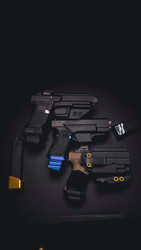
Glock Failure to Return to Battery
Posted by The Glockster on Sep 20th 2026
Glock Failure to Return to Battery: Causes, Diagnosis & What to Check
Slide stopping just short of fully closed? Here's how we separate ammunition and chamber-fit problems from recoil-system issues, extractor drag, aftermarket barrels, trigger parts, optic hardware, fouling, compensators and the other shit that can keep a Glock from fully going into battery.
IronKells Armory | Glock | Troubleshooting | Cycling & BatterY
A Glock that stops an eighth-inch short of fully closed can look like a feeding problem, but once the cartridge is substantially in the chamber the diagnosis changes.
We've seen return-to-battery problems caused by dirty chambers, ammunition fit, weak recoil springs, recoil springs that were too light for the rest of the setup, aftermarket barrels, tight extractors, optic hardware, trigger components, guide rods, compensators, suppressors and combinations of little problems that only showed up once the gun got hot and dirty.
Sometimes the fix is simple.
Sometimes three individually minor issues stack together and create one annoying gun.
The first question we usually ask is: what changed right before it started doing this?
“Almost in battery is still out of battery. Find the resistance instead of trying to overpower it.”
The Fast Summary
Start with ammunition and chamber fit. A cartridge that doesn't freely fit the chamber can stop the slide before lockup.
Clean the chamber and moving surfaces. A marginal setup can run clean and start acting stupid once carbon and friction build.
Check the recoil system. Weak, damaged, binding, incorrectly assembled or badly matched recoil systems can affect forward slide movement.
Check whatever you just installed. Barrel, optic, trigger, comp, guide rod, recoil spring or slide.
Don't force a live round closed. Find out why the slide stopped.
Failure to Feed vs. Failure to Return to Battery
| What Happens | Better Diagnosis |
|---|---|
| Round never gets properly started toward the chamber | Failure to Feed |
| Round enters chamber but slide stops short of fully closing | Failure to Return to Battery |
| Slide stops short even when cycling unloaded | Mechanical drag, fitment, recoil system, trigger interaction, barrel/slide relationship |
If the round never really makes it into the chamber, start with the Glock Failure to Feed Guide .
Before Touching Anything, Find the Pattern
Return-to-battery problems get a lot easier when you stop treating every occurrence as random.
- Only with one ammunition brand?
- Only after installing an aftermarket barrel?
- Only after mounting an optic?
- Only after trigger work?
- Only after changing recoil spring weight?
- Only after installing a compensator?
- Only when suppressed?
- Only after several dirty or hot magazines?
- Does it happen when cycling unloaded?
Those answers can cut the troubleshooting tree in half before you buy anything.
1. Ammunition and Chamber Fit
When a live round is nearly chambered, one of the first things we care about is whether the cartridge actually fits the chamber freely.
Factory ammunition is generally consistent, but damaged cases, unusual bullet profiles, ammunition outside normal dimensions or certain handloads can still give one barrel problems while running fine in another.
Aftermarket barrels can also have different chamber dimensions and throat geometry than the OEM barrel.
We've absolutely seen ammunition that was happy in a factory Glock barrel but noticeably tighter in an aftermarket match barrel.
If the problem follows one ammunition type and disappears with another, that's not noise. That's a clue.
2. Do the Plunk Test
With the barrel removed from the pistol, drop a sample cartridge from the ammunition that caused the malfunction into the chamber.
It should seat freely without being forced and release freely when the barrel is inverted.
Compare:
- The ammunition that malfunctioned
- A known-good ammunition load
- OEM barrel vs. aftermarket barrel if you have both
If the same cartridge drops freely into the OEM barrel but hangs in the aftermarket barrel, you just learned something useful.
3. Carbon, Dirt, Heat and Lubrication
A setup can have enough operating margin to work perfectly clean and then become unreliable once friction starts stacking up.
Pay attention if the gun:
- Runs perfectly for the first few magazines
- Starts stopping short as the chamber gets dirty
- Gets worse during long suppressed sessions
- Improves immediately after cleaning and lubrication
We've seen lightly sprung competition setups that were perfect clean but became noticeably more sensitive once they got filthy.
That doesn't automatically mean the spring is wrong. It tells you the setup has less room for extra friction.
4. Recoil Spring Weight and Condition
A worn or weak recoil spring can contribute to a slide stopping short because it has less energy available during the closing stroke.
But lighter isn't automatically worse and heavier isn't automatically better.
We've had compensated guns become reliable when we went lighter.
We've also had highly tuned guns become more reliable by stepping back up one spring weight because the ultra-light setup didn't leave enough margin for friction and fouling.
Spring weight has to make sense with the ammunition, slide, barrel, compensator and rest of the gun.
Very Light Recoil Springs Can Expose Other Drag
We've seen highly tuned guns run perfectly with light recoil springs until fouling, tight fitment, striker-spring pressure or another little bit of resistance gets added to the system.
Sometimes moving back up one spring weight makes the gun boringly reliable again without ruining how it shoots.
For the deeper spring-weight and striker-spring discussion, see the Glock Recoil Spring Tuning Guide .
5. Check the Recoil System for Binding or Bad Assembly
If the problem started immediately after cleaning or changing the guide rod, look at the recoil system before inventing some exotic problem.
Check for:
- Correct recoil system for the model and generation
- Proper seating during assembly
- Bent or damaged guide rod
- Aftermarket spring rubbing or kinking
- Guide-rod screws backing out on serviceable systems
- Spring coils binding where they shouldn't
One thing that can be normal: a factory recoil spring assembly may not sit in exactly the same barrel-notch position after the pistol has cycled as it did during assembly.
Don't diagnose a problem just because it moved from the assembly position.
6. Aftermarket Barrel Fitment
A barrel has to do more than hold the cartridge.
It has to unlock, drop, move, rise and lock back into the slide without too much drag.
We've seen aftermarket barrels that were accurate as hell but noticeably tighter during lockup than the OEM barrel.
Useful comparison:
- Does the factory barrel run?
- Does the aftermarket barrel fail?
- Does the same ammunition plunk freely in both?
- Can you feel abnormal drag during unloaded cycling?
If the problem follows the barrel, that tells us more than somebody saying “you need a heavier spring.”
7. Extractor Drag Can Stop the Slide Short
As the round chambers, the case rim has to get into its proper relationship with the extractor.
If the extractor is too tight, dirty, bound up or prevented from moving normally, the case rim can run into more resistance than it should.
We've seen guns where the cartridge was basically chambered but the last little bit of extractor engagement was enough to stop the slide.
If the slide is always stopping at nearly the same point and the cartridge rim hasn't seated correctly under the extractor, look there.
8. If It Started After an Optic Install, Check the Screws
This one has wasted a lot of people's time.
On applicable Glock optic setups, a mounting screw can sit close enough to the extractor depressor-plunger channel that an overly long screw interferes with the extractor system.
We've seen guns develop cycling problems immediately after mounting an optic and go back to normal once the screw length was corrected.
If the gun ran before the optic and stopped running after the optic, check the optic before blaming the recoil spring.
9. Trigger Parts Can Create Mechanical Drag
People don't usually think “trigger” when the slide won't close.
But aftermarket trigger bars, connectors, safety-plunger interaction, aggressive pre-travel adjustments and incorrectly fitted trigger systems can add drag during cycling.
We've seen guns develop battery problems right after trigger work and return to normal when the known-good factory components went back in.
If the problem started after trigger work, returning to the previous setup is a completely legitimate diagnostic test.
10. Compensators Change the Operating Window
A compensator can change how the pistol cycles.
We've had compensated Glocks run perfectly on factory springing and others that became much happier after recoil-spring or ammunition changes.
If the problem started immediately after installing a comp, look at:
- Ammunition power
- Recoil spring weight
- Barrel and comp fit
- Slide mass
- Fouling
Don't automatically jump to “comp means 13 lb spring.” Test the actual setup.
11. Suppressed Guns Can Become a Different Animal
Threaded barrel, suppressor weight, booster behavior, fouling and ammunition all add variables.
One pattern we've seen is a pistol that:
- Runs perfectly clean
- Starts stopping short after getting hot and dirty
- Runs normally again after cleaning
That usually tells us the setup doesn't have much extra reliability margin once friction starts building.
A Useful Question: Does It Bind Without Ammunition?
With the pistol unloaded and verified clear, slowly cycle the slide and feel for abnormal resistance.
If it hangs in nearly the same position with no cartridge involved, you've removed ammunition and magazine presentation from the equation.
Now look harder at:
- Barrel-to-slide fit
- Trigger-bar / connector interaction
- Safety-plunger interaction
- Guide rod or recoil spring binding
- Slide/frame friction or damage
That's a simple way to stop blaming ammunition for a mechanical problem.
Return to the Last Known-Good Configuration
This is one of the fastest ways to troubleshoot a modified Glock.
If you still have compatible known-good parts:
- Put the OEM barrel back in.
- Put the factory recoil system back in.
- Check or remove the optic installation if the problem began there.
- Return the trigger system to the previous known-good configuration.
- Remove the comp or suppressor when practical.
- Retest with known-good ammunition.
Then add the changes back one at a time. When the problem returns, you've probably found the direction to keep digging.
Our Return-to-Battery Diagnostic Order
- Identify when the failure occurs.
- Try known-good ammunition.
- Plunk-test the ammunition in the actual barrel.
- Clean and lubricate the pistol.
- Verify the recoil system isn't binding or assembled incorrectly.
- Check recoil spring condition and whether the weight makes sense for the setup.
- If an aftermarket barrel is installed, compare it against the OEM barrel.
- Check extractor movement and optic screw interference.
- If trigger work was recently performed, return to the known-good trigger configuration.
- If compensated or suppressed, test the gun without that variable when practical.
- Change one thing at a time.
Quick Clue Chart
| Pattern | Look Here First |
|---|---|
| Only one ammo load fails | Chamber fit, cartridge dimensions, bullet profile |
| Only aftermarket barrel fails | Chamber dimensions, lockup, barrel/slide fit |
| Started after optic install | Mounting screw interference, plate fit, extractor movement |
| Started after trigger install | Trigger bar, connector, plunger interaction, adjustment |
| Gets worse as gun gets dirty | Operating margin, lubrication, chamber fouling, spring weight |
| Only after light recoil spring installed | Spring weight, drag, fitment, striker-spring interaction, fouling |
| Binds even with unloaded chamber | Mechanical fit or drag — not ammunition |
When to Stop Troubleshooting
If a live cartridge is stuck tightly in the chamber, you find damaged or abnormal components, or the slide cannot reliably reach its proper locked position, stop firing.
Do not repeatedly force live rounds into battery just to see whether the gun will eventually fire.
A pistol that can't reliably lock up needs the cause corrected before it goes back into normal use.
Common Return-to-Battery Questions
Can a weak recoil spring cause failure to return to battery?
Yes. A worn or weak recoil spring has less energy available during the closing stroke and may struggle more against chambering friction or other drag.
Can a brand-new recoil spring still be too light?
Yes. In tuned guns, an extremely light recoil spring can become marginal once you add fouling, tight barrel fit, striker-spring pressure or other resistance.
Can an aftermarket barrel cause it?
Absolutely. Chamber fit and barrel-to-slide fit can both differ. Comparing the aftermarket barrel against a known-good OEM barrel is one of the easiest tests.
Can an optic screw cause it?
Yes. On applicable Glock optic setups, an overly long screw can interfere with the extractor-plunger system and create cycling problems.
Can trigger work cause battery problems?
It can if the trigger bar, connector, safety-plunger interaction or adjustment creates abnormal drag. If the problem appeared immediately after trigger work, return to the last known-good setup and retest.
Why does it only happen after several magazines?
Heat, fouling and friction can expose a setup that's already running close to the edge. If it works clean and fails dirty, that's valuable information.
Related Forge Files
Glock Failure to Feed
Magazine presentation, ammunition, feed angle, chambering and feeding diagnosis.
Glock Recoil Spring Tuning
Spring weights, ammunition, compensators, slide timing and real-world tuning.
Glock Magazine Troubleshooting
Followers, feed lips, springs, extensions and magazine-related problems.
Glock Compatibility Guide
Models, generations, barrels, recoil systems and parts fitment.
Glock Optic Mounting & Screw Problems
Plates, hardware, extractor-plunger interference and optic-related cycling issues.
Bottom Line
A slide stopping short is usually fighting resistance somewhere.
Find the resistance.
Figure out what changed.
Compare against the last known-good setup.
Then fix the cause instead of installing a stronger spring and hoping it bulldozes through whatever's wrong.
Find the Drag. Fix the Cause.
A stronger spring can sometimes hide resistance. Better troubleshooting figures out why the resistance is there.
Glock Forge Files Recoil Spring GuideSource List / Receipts
This guide combines the original IronKells troubleshooting material, hands-on setup experience, Glock maintenance information, aftermarket fitment experience and documented cycling problems.
| ID | Source | Used For |
|---|---|---|
| S1 | Original IronKells Forge File Material | Recoil-spring behavior, barrel fit, trigger interaction, chamber fit, suppressed setups and practical troubleshooting |
| S2 | GLOCK Owner / Maintenance Material | Recoil-system assembly, maintenance, cleaning and inspection |
| S3 | GLOCK Optic-Mounting Information | Optic hardware and screw-interference considerations |
| S4 | Aftermarket Barrel / Fitment Testing | Tight chambers, barrel-to-slide drag and lockup differences |
| S5 | Shooter / Armorer Troubleshooting Reports | Trigger-bar drag, extractor interference and modified-Glock battery problems |
IRONKELLS ARMORY | FORGE FILES
Receipts Over Rumors.
Find what changed. Isolate the resistance. Make the gun prove the fix.