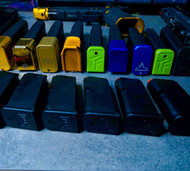
Glock Magazine Troubleshooting
Posted by The Guy on Sep 22nd 2026
Glock Magazine Troubleshooting: Feeding, Springs, Followers & Fitment
Weak springs, extensions, damaged feed lips, follower drag, first-round and last-round failures, aftermarket magazines, magazine catches, slide lock, and the real-world tests we use to figure out whether the magazine is actually the problem.
IronKells Armory | Glock | Magazines | Troubleshooting
Magazines get treated like dumb boxes that hold ammo.
They're not.
The magazine controls how high the next round sits, how fast it rises, when it releases from the feed lips, how the cartridge is angled toward the chamber, and whether the follower gets high enough to work the slide stop.
We've seen magazines that looked perfectly fine cause one failure every few hundred rounds. We've seen extended magazines run thousands of rounds without a hiccup. We've seen springs that still felt strong at the top of the stack but couldn't keep up on the last few rounds.
We've seen aftermarket magazines work better than people expected, and we've seen others turn a perfectly reliable Glock into a damn science project.
That's why the magazine is one of the first things we isolate when a Glock starts acting stupid.
“If the problem follows one magazine, stop rebuilding the damn gun.”
The Fast Summary
Number your magazines. If the same one keeps showing up every time the gun chokes, that's evidence.
Where in the magazine it fails matters. First round, middle of the stack and last round can point toward different problems.
Extensions change the system. More capacity changes spring travel, spring compression and how much work the magazine spring has to do.
OEM is our control — not our religion. Aftermarket magazines can run great. A known-good factory magazine simply gives us a clean baseline.
Clean the damn magazine. Dirt, grit and follower drag cause problems that people love blaming on the pistol.
What Actually Matters Inside the Magazine
- Magazine body: controls the cartridge stack and follower path.
- Feed lips: control how the cartridge is held and released.
- Follower: supports the cartridge stack and usually works the slide stop when empty.
- Magazine spring: has to lift the entire stack quickly enough to keep up with the slide.
- Baseplate or extension: closes the magazine and may change capacity and internal travel.
- Magazine-catch interface: controls where the magazine actually sits in the frame.
Any one of those can make a perfectly good Glock look broken.
1. Weak Magazine Springs
A weak spring doesn't usually mean the magazine suddenly quits working completely.
Most of the time it's more annoying than that.
- Last-round nose-dives
- Failures near the bottom half of the magazine
- Slide closes without properly picking up the next round
- Intermittent failure to lock open on empty
- Gun runs slowly but starts outrunning the magazine during faster cycling
Last-few-round failures have always been one of the patterns that makes us start looking harder at spring pressure.
Not proof by itself. Definitely a clue.
2. Feed Lips Control Presentation
Bent, spread, cracked, worn or inconsistent feed lips can change both the angle and timing of cartridge release.
That can show up as:
- Nose-down failures
- Nose-up jams
- Rounds sitting visibly different from one magazine to another
- Rounds releasing too early
- Rounds staying controlled too long
Put the suspect magazine next to one that works.
Sometimes the difference in top-round presentation is obvious before you measure a damn thing.
3. Followers Can Drag, Tilt or Bind
Push the follower down and let it come back up.
It should move smoothly.
If it catches halfway, slows down, rocks strangely or feels gritty, figure out why.
Common things we look for:
- Dirt inside the magazine body
- Damaged follower
- Bent or distorted magazine body
- Spring installed incorrectly after disassembly
- Aftermarket follower and body dimensions that don't play well together
A follower doesn't need to lock solid to be slow enough to cause trouble.
Where in the Magazine Does It Fail?
| Pattern | What We Start Looking At |
|---|---|
| First one or two rounds from a full magazine | Full-stack pressure, seating, top-round drag, feed lips, extension setup |
| Same spot in the middle every time | Follower drag, spring binding, rough spot inside the body, stack geometry |
| Last few rounds | Weak spring, follower behavior, slide speed outrunning magazine presentation |
| Only fails when fully loaded | Seating, top-round drag, extension capacity, spring compression, feed lips |
| Works downloaded by one or two rounds | Full-capacity compression and available internal room become interesting |
Don't write down “jammed.” Write down mag #4, round 15 of 17, nose-down. Now you have something useful.
4. Full-Magazine Seating Problems
A completely full magazine puts maximum upward pressure against the underside of the slide.
Some magazine and extension combinations are tight enough at full capacity that there isn't much extra spring compression left.
Pay attention if the magazine:
- Seats easily with the slide locked open
- Needs a hard smack with the slide closed
- Works perfectly downloaded by one round
That doesn't automatically mean the magazine is defective. It means full-stack pressure belongs in the diagnosis.
5. Magazine Extensions Change More Than Capacity
Put a +2, +5 or +6 extension on a magazine and you've changed the spring's job.
It now has:
- More cartridges to lift
- More internal travel
- Different compressed and extended positions
- More opportunity for follower or spring behavior to change through the stack
We've run plenty of extended Glock magazines without problems.
We've also seen somebody slap a big extension onto an old magazine with an old spring and then blame the pistol when it starts nose-diving rounds.
If the extension maker includes or recommends a different spring, use that information. They changed the internal geometry for a reason.
6. Mixing Magazine Parts Means Mixing Tolerances
People will build one magazine out of:
- One company's magazine body
- Another company's extension
- A third company's spring
- A fourth company's follower
- An aftermarket magazine catch
Then they act surprised when the whole thing doesn't behave like a factory magazine.
That doesn't mean you can't mix parts.
We do.
It means every additional part adds another tolerance that needs to prove itself.
7. OEM vs. Aftermarket Magazines
We're not going to tell you aftermarket magazines are automatically junk.
Some run great.
But when diagnosing a problem, we want a known-good baseline.
On a Glock, a proven OEM magazine is usually the easiest control.
If the pistol runs hundreds of rounds through several OEM mags and repeatedly fails with one aftermarket magazine, that's useful.
If the aftermarket magazine also runs hundreds or thousands without an issue, then it has earned some trust in that pistol.
We're interested in what actually works — not what logo is molded into the side.
8. G43X / G48: The Magazine Conversation Changed
For years the G43X and G48 conversation was basically:
Factory 10 rounds or aftermarket higher capacity.
That's not the whole picture anymore.
GLOCK now offers factory 15-round magazines for the G43X and G48, which means higher capacity is no longer automatically an aftermarket-magazine conversation.
Older aftermarket systems still matter. We've seen plenty of Shield Arms setups and other combinations, and individual guns can absolutely have preferences.
Same rule as always: test the exact magazine and catch combination in the exact pistol.
9. Magazine Catch Height and Fit Matter
If the magazine sits too low, cartridge presentation changes.
If the magazine doesn't fully lock in, the slide can skip over the top round or only partially catch it.
Look for:
- Magazine can be pulled out without pressing the release
- Different magazines sit at noticeably different heights
- Aftermarket catch shows obvious wear
- Problem started immediately after changing the catch
- Magazine drops or shifts under recoil
The magazine has to be in the right damn place before anything above it gets a fair chance.
10. Clean the Damn Magazine
Especially if you shoot outdoors, competition, training classes, dusty ranges or anywhere the magazines hit the ground.
Drop one into West Texas dirt enough times and eventually that dirt is coming home with you.
Take it apart and look inside.
- Grit
- Powder residue
- Brass shavings
- Dried mud
- Follower wear
- Spring corrosion or damage
We generally keep pistol-magazine interiors clean and dry instead of soaking them with oil that turns dust into sludge.
Sometimes a “bad magazine” is just a filthy magazine.
11. Slide Lock: Magazine Problem or Shooter Problem?
The follower helps raise the slide-stop lever when the magazine is empty.
If the slide doesn't lock back, magazine-related possibilities include:
- Weak spring
- Damaged follower
- Follower not rising completely
- Wrong follower and spring combination
But don't forget the shooter.
Thumb pressure on the slide stop can prevent lock-back, especially with a high thumbs-forward grip.
Before you sentence the magazine to death, let somebody else shoot the gun.
The One-Round Lock-Back Test
Simple and useful.
- Load one round in the magazine.
- Fire normally.
- See whether the slide locks open.
- Repeat several times.
- Repeat with every magazine.
If four magazines lock the slide open every time and magazine #5 doesn't, magazine #5 just volunteered for inspection.
If none of them lock open, now ammunition, recoil-system behavior, slide-stop function and shooter contact all become more interesting.
Partial-Load Testing
If a 17-round magazine keeps failing, don't only test it at 17 rounds.
Try:
- Full capacity
- Full minus one
- Ten rounds
- Five rounds
- Two rounds
If it consistently fails near the same point in the stack, follower drag, spring binding or another internal problem moves higher on the list.
That's a hell of a lot more useful than “it jams sometimes.”
Number Your Magazines
Seriously.
1, 2, 3, 4, 5.
Paint pen, engraving, number band — we don't care.
If the pistol has three malfunctions in six months and all three happened with magazine #3, now you have evidence instead of a vague memory that “it jammed once.”
This is one of the cheapest reliability upgrades you can make because it improves diagnosis without changing a single part.
Look at the Top Round
Compare the suspect magazine to one you know works.
Look at:
- Top-round angle
- How high the case sits
- Whether the round rocks excessively
- Whether it looks noticeably nose-low
- Whether hollow points and FMJ present differently
You don't need a lab fixture to notice when one magazine's top round looks obviously wrong compared with the other five.
Make Sure the Stack Is Settled
Especially with extended magazines, we like the cartridges sitting consistently toward the rear instead of having half the stack walked forward.
A quick tap against the palm after loading can help settle things.
Is that the cure for every nose-dive? Hell no. But if the stack is obviously inconsistent before the magazine even goes into the gun, clean that up first.
When the Gun Starts Outrunning the Magazine
This shows up more often on tuned guns.
A lightweight slide, hotter ammunition, compensator setup or recoil system that cycles aggressively can reduce how much time the magazine has to get the next cartridge fully into position.
If the magazine spring is already marginal, that can expose it.
We've seen guns run perfectly with fresh magazine springs and start showing occasional nose-dives after those springs got tired.
Sometimes the pistol didn't suddenly become “too fast.”
The magazine simply stopped keeping up.
If the problem appeared after changing slide weight, adding a compensator or changing recoil spring weight, also read the Glock Recoil Spring Tuning Guide .
The Old G22 / G23 Weapon-Light Example
This stays because it's a damn good example of magazine dynamics.
Some older .40-caliber G22 and G23 pistols developed feeding problems with weapon lights installed.
Testing on affected guns pointed heavily toward magazine behavior. Some pistols would fail in the middle of a full-capacity magazine but run normally with different magazines or stronger springs.
That doesn't mean your modern 9mm Glock is going to shit itself because you mounted a light.
It means magazine spring speed matters enough that changing the pistol's operating behavior can expose a marginal magazine.
Range Mag, Competition Mag and Carry Mag Aren't Always the Same Job
We don't treat every magazine exactly the same.
A competition magazine may have:
- A big extension
- Aftermarket spring
- Follower changes
- A lot of drop damage
- A very specific capacity goal
A defensive magazine has a different priority:
boring reliability.
That doesn't mean it has to be OEM.
It means whatever you choose needs to earn your trust in your pistol with the ammunition you actually use.
When We Rebuild It — and When We Trash It
Weak spring but good body and lips?
A new spring and follower may put it right back in service.
Dirty?
Clean it.
Bad follower?
Replace it if the rest of the magazine is worth saving.
Cracked body, badly damaged feed lips, obvious distortion or a magazine that keeps causing problems after reasonable repair?
At some point the magazine is cheaper than your time.
Our Magazine Troubleshooting Order
- Identify the magazine. Number them.
- Record which round in the stack failed.
- Compare against a known-good magazine.
- Check seating and magazine-catch engagement.
- Inspect feed lips.
- Check follower movement.
- Clean the magazine body, follower and spring.
- If extended, make sure the spring makes sense for that extension.
- Try full, partial and low-round-count loads.
- Run one-round lock-back testing.
- Test the exact ammunition involved.
- If it still causes failures while the other magazines don't, repair it or retire it.
Quick Clue Chart
| What You See | Look Here |
|---|---|
| One magazine causes every malfunction | That magazine |
| Last few rounds nose-dive | Spring strength, follower movement |
| Only fails full | Full-stack pressure, seating, extension setup |
| Fails at same middle round count | Follower or spring binding inside body |
| Won't lock back on empty | Follower, spring, slide stop, shooter thumb |
| Started after +5 extension | Spring length/strength, follower, extension fitment |
| Works OEM, fails aftermarket | Geometry, catch, spring, follower, tolerance stack |
| Works downloaded one round | Full-capacity compression / top-round pressure |
Common Glock Magazine Questions
How do I know if my magazine spring is weak?
Repeated last-round or lower-stack failures, sluggish follower movement, inconsistent lock-back or a magazine that can't keep up while fresh magazines work correctly are all clues.
Do I need a stronger spring with a magazine extension?
Often with larger capacity extensions, yes — but not automatically. Use the spring setup that makes sense for the specific extension and test it.
Are aftermarket Glock magazines bad?
No. Some run great. We use a known-good OEM magazine as the troubleshooting control because it removes a variable, not because aftermarket automatically means unreliable.
Should I lubricate the inside of the magazine?
We generally keep pistol-magazine interiors clean and dry. Excess oil can collect dirt and turn contamination into sludge.
Why does my magazine only fail on the last round?
The spring is near its least-compressed position, so a marginal spring or follower problem may become more obvious there.
Why does it only fail when fully loaded?
Full capacity creates the highest stack pressure and can expose seating, feed-lip, extension or spring-compression issues.
Do G43X and G48 owners still need aftermarket magazines to get 15 rounds?
No. Factory 15-round G43X/G48 magazines now exist. Aftermarket systems still exist and can work well, but 15-round capacity is no longer aftermarket-only.
Related Forge Files
Glock Failure to Feed
Nose-up and nose-down jams, ammunition, chambering, magazines and feeding diagnosis.
Glock Failure to Return to Battery
Rounds that enter the chamber but leave the slide short of fully closed.
Glock Recoil Spring Tuning
Slide timing, spring weight, compensators, ammunition and magazine-speed interaction.
Glock Compatibility Guide
Generation, model and parts compatibility.
Bottom Line
Magazines are part of the operating system.
Number them.
Pay attention to where in the stack the failure happens.
Use the right spring when you add capacity.
Use a known-good magazine as a control.
And if one magazine keeps screwing up while the other six don't, believe the six.
Track the Magazine. Find the Pattern.
A paint marker can sometimes tell you more than a pile of replacement parts.
Glock Forge Files Glock Magazines & ExtensionsSource List / Receipts
This guide combines the original IronKells magazine and failure-to-feed material, hands-on magazine testing, current Glock magazine changes and real-world aftermarket experience.
| ID | Source | Used For |
|---|---|---|
| S1 | Original IronKells Forge File Material | Weak springs, extensions, first/last-round patterns, partial-load testing, follower drag, cleaning and magazine numbering |
| S2 | GLOCK Magazine / Current Slimline Information | Current OEM magazine families and G43X/G48 15-round updates |
| S3 | Aftermarket Magazine & Extension Manufacturer Information | Extension fitment, spring changes and magazine-catch considerations |
| S4 | Streamlight Glock Feeding Testing | Magazine spring dynamics in affected G22/G23 weapon-light setups |
IRONKELLS ARMORY | FORGE FILES
Receipts Over Rumors.
Number it. Test it. Find the pattern.