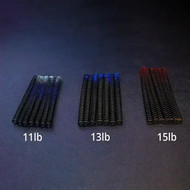
Glock Recoil Spring Tuning
Posted by Your Friendly Neighborhood Glock on Sep 22nd 2026
Glock Recoil Spring Tuning: Spring Weights, Ammo, Comps & Slide Timing
A practical guide to 13, 15, 17, 18 and heavier recoil springs, compensated Glocks, light and hot ammunition, slide timing, ejection, sight tracking, guide rods, and figuring out what your particular Glock actually runs best.
IronKells Armory | Glock | Recoil Springs | Setup & Tuning
Recoil spring tuning is one of those subjects where people either act like the factory setup is the only answer or start swapping springs until the gun feels cool.
Neither one is very useful.
A stock Glock is built around a broad operating window. But once you start adding compensators, changing slide weight, running very soft ammunition, shooting hotter loads, changing guide rods or chasing a certain recoil impulse, spring weight becomes another tuning tool.
We've run enough different Glock setups to know that two guns that look almost identical on paper can behave differently once ammunition, optics, comps, barrels, guide rods, magazine springs and shooter input get involved.
So use the numbers in this guide as starting points. Then let the gun tell you where it wants to be.
“The chart gets you close. Reliability, ejection and sight tracking tell you where to stop.”
One thing before the chart: when we talk about 13, 15, 17, 18 or 20 lb springs, we're usually talking about aftermarket single-spring or tunable guide-rod setups. Glock's factory captive recoil assemblies are complete systems, not a simple universal pound-rating chart.
What the Recoil Spring Actually Changes
The recoil spring resists the slide during rearward travel, stores energy as it compresses and helps drive the slide forward again.
Change the spring and you can change:
- How easily the slide travels rearward
- How hard the slide returns forward
- How soft ammunition cycles
- How hotter ammunition feels
- How a compensated setup runs
- How the dot or sights track
- Ejection consistency
- How much reliability margin the gun has when dirty
What it does not mean is that the recoil spring is responsible for every cycling problem.
Factory RSA vs. Aftermarket Single-Spring Systems
A lot of Gen4 and Gen5 Glock pistols use dual-captive factory recoil spring assemblies.
When somebody says, “I put a 13 lb spring in my Glock,” they're usually talking about an aftermarket guide rod with a replaceable single spring or another tunable recoil system.
That's why systems exist with multiple spring options.
For example, some current G19-family tunable guide rods are sold with 13, 15 and 18 lb options.
The whole point is to give you choices because one spring doesn't fit every build and every ammunition load.
Practical Spring-Weight Starting Points
These are the kinds of starting points we've used and seen work across tuned Glock setups. They are not magic numbers.
| Setup | Starting Point | What We've Seen |
|---|---|---|
| G17 / G34, stock-style setup | Factory RSA or roughly 17 lb aftermarket | Good general-purpose baseline. If the gun already runs everything you use, there usually isn't a reason to start screwing with it. |
| G19, stock-style setup | Factory RSA; aftermarket setups commonly land around 15–18 lb | Factory springing works across a broad range. Tunable systems give you room to move depending on the rest of the build. |
| G17 / G34, single-port comp | Around 15 lb | A solid place to start when factory springing feels marginal with ordinary ammo. |
| G19, single-port comp | 15 lb first; 13 lb if the setup still needs help | We've seen plenty of G19 comp setups become very happy in this range. |
| Efficient / aggressive compensator | Around 13 lb | Common competition territory when a comp and softer ammunition reduce the energy available to cycle the slide. |
| Light target ammunition, no comp | Around 15 lb | Very common on range and competition G17/G34 builds running softer ammo. |
| Soft competition ammo + comp | 13–15 lb | One of the most common tuning windows we've seen. |
| Hotter +P-style ammo, no comp | Factory first; 18–20 lb only if the actual setup gives you a reason | Going heavier can calm some setups, but it also sends the slide forward harder and can create problems with lighter ammo. |
| Hot ammo + compensator | Often factory to 15 lb | Hotter ammo and compensation can pull the setup in opposite directions. Plenty of comped guns still run factory springing just fine. |
| Below 13 lb | Purpose-built competition territory | This is where striker spring, friction, fouling, slide mass and the whole gun start mattering a lot more. |
| G17 / G34 competition setup with optic | 13–15 lb | A lot of competition shooters live here because it can give a smoother cycle and cleaner sight return when matched to the load. |
Use this as a starting-point chart, not a prescription. If the gun hates our starting point, believe the gun.
Compensated Glocks: Where Spring Tuning Gets Interesting
This is where recoil spring tuning becomes genuinely useful.
A compensator changes how gas is used and can change the recoil impulse available to operate the slide.
Depending on the comp, ammunition, slide, barrel, optic and spring setup, the gun may:
- Run perfectly on stock springing
- Run better at 15 lb
- Need 13 lb
- Need hotter ammunition
- Need a combination of spring and ammunition changes
We've had compensated Glocks run beautifully on factory recoil systems.
We've also had setups go from annoying to boringly reliable after stepping down to 15 or 13 lb.
The lesson isn't “comp = light spring.” The lesson is the comp changes the system enough that spring tuning may matter.
Ammo and Spring Weight Have to Work Together
A spring that feels perfect with full-power defensive ammunition may be too much for soft competition ammo.
Likewise, a very light spring that runs soft ammo beautifully may feel violent and unnecessary once you start feeding the gun hotter loads.
A common competition example is 9mm minor-power ammunition in the roughly 125–135 power-factor neighborhood.
In G17 and G34 setups, 13–15 lb springs are common because those softer loads may not cycle as cleanly against heavier springing.
Pick the ammunition the gun is actually going to live on. Then tune around that.
Signs the Spring May Be Too Heavy for the Setup
No single symptom proves it. We're looking for patterns.
- Weak or inconsistent ejection
- Stovepipes or incomplete rearward travel with softer ammo
- Intermittent failure to lock back after magazines and thumb interference are ruled out
- Gun became unreliable immediately after going heavier
- Noticeable hard forward dip as the slide returns
- Compensated gun feels sluggish with ammunition that used to run
The answer isn't automatically “go lighter.” But spring weight moves higher on the list.
Signs the Spring May Be Too Light
- Very aggressive or suddenly much farther ejection after the spring change
- Sharper rearward impact feel
- Gun feels unnecessarily violent with hotter ammunition
- Return-to-battery becomes marginal once the gun gets dirty
- Sight tracking gets worse even though the gun technically cycles
We've seen ultra-light setups run great clean and then start stopping short once a little fouling or extra drag shows up.
Sometimes stepping back up one spring weight fixes the problem without giving up anything meaningful.
If the slide is actually stopping short of fully closed, don't assume spring weight is the whole problem. Use the Glock Failure to Return to Battery Guide to check chamber fit, extractor drag, barrel fit, optic hardware and other resistance first.
Very Light Recoil Springs and Striker-Spring Pressure
This matters mostly once you get into highly tuned guns.
As the slide moves forward, it's also working against the striker system.
With normal factory-style recoil springing, you usually don't need to think about that relationship.
Once you start dropping way down in recoil spring weight, that opposing force becomes more important.
We've seen guns get into a zone where the recoil spring is light enough that striker-spring pressure, fouling and little bits of drag suddenly matter a lot more.
That's fine on a race gun you understand. It's not something we'd chase just because lighter sounds better.
Sight Tracking: Reliability Isn't the Only Thing You Can Tune
Once the gun is reliable, experienced shooters often start tuning around how it tracks.
A setup that returns the dot smoothly and predictably can be easier to shoot fast than one that slams forward hard and dips the muzzle.
We've had guns where two spring weights were both completely reliable, but one clearly gave better sight return.
That's a legitimate reason to choose one over the other.
Reliability first. Feel and tracking second.
Using Ejection as a Tuning Clue
Watch where the brass goes.
Just don't treat it like some exact scientific spring-weight gauge.
| Pattern | What It Can Suggest |
|---|---|
| Consistent ejection into roughly the same area | Usually a good sign that the setup is cycling consistently. |
| Cases dribble nearby / occasional stovepipe | Gun may be marginal on cycling energy — spring, ammo, comp, grip or another variable. |
| Brass launches much farther after going lighter | Slide is probably cycling more aggressively, but extractor/ejector and ammo still matter. |
| Ejection changes dramatically after one modification | That modification belongs in the diagnosis. |
We like consistency more than some internet rule saying your brass has to land exactly four feet away at 3:30.
Going Below 13 lb
Now you're getting into purpose-built territory.
We've seen 11 lb and even lighter springs used successfully in race guns running soft ammunition and aggressive compensators.
They can run beautifully.
They can also become much more sensitive to:
- Striker spring weight
- Ammunition power
- Compensator efficiency
- Slide mass
- Maintenance
- Carbon and fouling
- Return-to-battery behavior
That's acceptable on a competition gun somebody understands and maintains. It's a different goal from a general-purpose gun that needs a broad reliability window.
Going Heavier Than Stock
Heavier isn't automatically safer, softer or better.
A heavier spring creates more resistance on the rearward stroke, but it also drives the slide forward harder.
We've seen overly heavy setups create a very noticeable forward muzzle dip as the slide closes.
They can also turn lighter ammunition into a cycling problem.
There are builds where 18 or 20 lb makes sense.
Use it because the gun gives you a reason — not because 20 sounds tougher than 15.
Steel, Tungsten & Quick-Tune Guide Rods
Changing guide-rod material does not automatically change spring weight.
A heavier steel or tungsten-style guide rod can add a little weight low and forward in the gun, which can change balance and feel.
But the bigger reason tuners move away from a factory captive assembly is usually simple:
easy spring changes.
If you're testing 13, 15, 17 and 18 lb options, a serviceable guide rod makes that a hell of a lot easier.
Just make sure the guide rod itself isn't creating binding, backing out or adding another mechanical problem.
Your Factory RSA Moved Off the Barrel Notch — That's Usually Normal
This one scares people constantly.
During assembly, the rear of the recoil spring assembly sits in the proper barrel-lug notch.
After the pistol cycles, it may no longer be sitting in exactly that same assembly position when you take the slide back off.
Don't automatically diagnose a recoil-system problem just because the assembly moved after the gun cycled.
When Should You Replace the Spring?
We don't use one universal round-count rule for every Glock and every recoil system.
A carry gun with a factory captive assembly is not the same maintenance problem as a competition gun running a 13 lb single spring.
On tunable systems, we pay attention to:
- Round count
- Free length compared with a fresh spring
- Changes in ejection
- Changes in lock-back
- Return-to-battery behavior
- How the gun feels compared with when the spring was fresh
Competition springs are cheap. If one has clearly changed and the gun's behavior changed with it, replace the damn spring.
Our Recoil-Spring Tuning Order
- Decide what you're trying to fix. Reliability? Comp function? Soft ammo? Sight tracking?
- Know the model, generation and recoil system.
- Pick the ammunition the gun will actually use.
- If the gun is stock and reliable, don't invent a problem.
- If it's compensated, start near what the comp maker recommends if they publish a setup.
- Move one spring step at a time.
- Test feeding, ejection, return to battery and slide lock.
- Watch the dot or sights through the cycle.
- Test with more than one magazine.
- Test the gun dirty enough to know it still has some reliability margin.
- Stop when it's reliable and tracks the way you want.
Quick Tuning Cheat Sheet
| What You See | What to Consider |
|---|---|
| Comped gun weakly ejects / short-strokes | Ammo strength, comp efficiency, spring may be too heavy |
| Soft target ammo barely cycles | Lighter spring may help after ammo, grip, cleanliness and magazines are checked |
| Gun runs but has hard forward dip | Spring may be heavier than needed |
| Ultra-light spring setup stops short of battery | Spring weight, striker pressure, barrel fit, extractor, fouling, optic hardware |
| Brass pattern changed immediately after spring swap | Spring change matters, but ammo, extractor and ejector still matter too |
| Gun is stock and runs everything reliably | Leave it the hell alone unless you have an actual tuning goal |
Common Glock Recoil Spring Questions
Should I change my recoil spring because I installed an optic?
Not automatically. If the gun runs reliably after the optic goes on, there isn't much reason to fix a problem you don't have.
Do I need a lighter spring with a compensator?
Sometimes. Some comped guns run factory springing perfectly. Others run better at 15 or 13 lb. Test the actual setup.
Is 13 lb the right spring for every compensated Glock 19?
No. It's a very common place to end up on certain setups, but we've also seen G19 comps run great at 15 lb or on factory springing.
Can ammunition affect recoil spring tuning?
Absolutely. The ammunition is supplying the energy that cycles the gun. Change the ammunition and you changed part of the equation.
Is lighter always flatter?
No. We've shot guns where going too light made the whole thing feel worse. What matters is how the complete setup cycles and returns.
How far should my brass eject?
We care more about useful consistency than an exact distance. Ejection can help tell you what the gun is doing, but it isn't a perfect spring-weight measuring tool.
Related Forge Files
Glock Failure to Feed
Feeding problems, magazines, ammunition, grip, slide timing and modified setups.
Glock Failure to Return to Battery
For slides that stop short of fully closing after the cartridge reaches the chamber.
Glock Magazine Troubleshooting
Feed lips, followers, magazine springs, extensions and magazine-speed problems.
Glock Compatibility Guide
Models, generations, recoil systems, slides, barrels and parts fitment.
Glock Compensator Guide
Comp design, porting, ammunition, recoil spring tuning, reliability and what actually changes when you add a comp.
Bottom Line
There is no magic recoil-spring number for every Glock.
13 lb can be perfect in one compensated competition gun and stupid in another pistol.
15 lb is a useful middle ground in a lot of tuned setups.
17–18 lb makes sense in plenty of more normal configurations.
20 lb and heavier has its place too — when the setup actually calls for it.
Factory springing is still the right answer for a huge number of stock and carry guns.
Start close. Test it. Watch the gun. Change one thing at a time.
Tune the Gun You Actually Have.
Not somebody else's Glock. Not somebody else's ammo. Yours.
Glock Forge Files Shop Glock SpringsSource List / Receipts
This guide combines the original IronKells spring-tuning material, hands-on Glock setup experience, competition tuning experience, factory recoil-system information and aftermarket guide-rod / compensator data.
| ID | Source | Used For |
|---|---|---|
| S1 | Original IronKells Spring Weight Tuning Material | 13 / 15 / 17 / 20 lb starting points, comp tuning, ejection, sight tracking and competition setups |
| S2 | GLOCK Recoil-System / Owner Information | Factory recoil assemblies, assembly position and general maintenance context |
| S3 | Aftermarket Compensator Tuning Information | Common compensated spring ranges and ammunition interaction |
| S4 | Tunable Guide-Rod Systems | 13 / 15 / 18 lb spring options and quick-tune recoil systems |
| S5 | Competition Shooter / Builder Experience | Sight tracking, soft-ammo setups, sub-13-lb use and practical spring replacement |
IRONKELLS ARMORY | FORGE FILES
Receipts Over Rumors.
Tune it. Test it. Make the gun prove it.