Glock Light Primer Strikes
Posted by The dude on Sep 28th 2026
Glock Light Primer Strikes
Weak striker springs, hard primers, dirty striker channels, aftermarket triggers, striker drag, bad ammo, improperly seated primers, and how we figure out why a Glock went click instead of bang.
IronKells Armory | Glock | Ignition & Primer Problems
Click.
No bang.
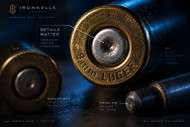
Round comes out with a little dimple in the primer.
And immediately somebody says:
“Hard primer.”
Maybe.
Harder and softer primer combinations absolutely exist, and we've seen tuned Glocks run one ammo perfectly while giving occasional light strikes on another.
We've also seen people install a 4 lb striker spring, oil the striker channel, stack aftermarket trigger parts together and then blame Winchester or Sellier & Bellot because the primer didn't light.
A light primer strike is a symptom. Figure out whether the gun hit the primer weakly or the primer actually failed after getting a proper hit.
“If you weakened the ignition system and the gun suddenly hates hard primers, don't blame the primer first.”
The Fast Summary
Look at what changed. If light strikes started after a reduced striker spring or trigger install, start there.
Keep the striker channel dry. Oil and debris can slow striker movement.
Hard primers are real. Some primer/ammunition combinations take more energy to ignite than others.
Federal-style primers have historically been popular in competition guns with lightened ignition systems. CCI and some NATO/European ammunition tend to expose marginal striker setups more quickly in our experience.
Primer dent matters. A barely visible dimple tells a different story than a solid normal-looking strike that still failed.
Reloads add primer seating to the list. A primer that isn't seated correctly can absorb striker energy instead of igniting cleanly.
For carry guns, we like ignition margin. A two-ounce lighter trigger isn't worth a gun that occasionally goes click.
If you get a click instead of a bang: keep the firearm pointed in a safe direction and treat the cartridge as live until it is safely cleared. Don't immediately stare down the muzzle or start screwing around with the round because you're annoyed.
Light Strike vs. Actual Misfire
These aren't automatically the same thing.
| What You See | What It Suggests |
|---|---|
| Very shallow primer dent | Insufficient striker energy, drag, contamination, gun not fully in battery or other ignition-system problem moves high on the list. |
| Normal-looking solid dent, round does not ignite | Ammunition/primer defect becomes more plausible. |
| Only one ammo brand fails | Primer sensitivity/hardness, lot differences or ammunition issues deserve attention. |
| Every ammo brand occasionally fails | Start looking harder at the gun. |
SAAMI's definition of a true misfire assumes the primer already received an adequate firing-pin blow. If the strike itself was weak, that's a different problem.
1. Read the Primer Dent
When a round doesn't fire, don't immediately throw it in the trash.
Look at the primer and compare it with fired cases from the same pistol.
Questions we ask:
- Is the dent obviously shallower than normal?
- Is it centered?
- Does every failure look the same?
- Do successful rounds show much deeper hits?
- Does the problem follow one ammunition brand?
We're looking for patterns.
One defective cartridge happens. Ten shallow strikes across three brands is telling you something else.
2. Striker Spring Weight — The Obvious One
The striker spring does two jobs people try to separate when they really shouldn't:
- It affects trigger pull.
- It launches the striker into the primer.
Lower spring weight reduces resistance during the trigger press.
It also reduces how much ignition energy you have available.
| Spring Range | How We Treat It |
|---|---|
| ~5–6 lb territory | General-purpose / carry-style ignition margin. |
| 4.5 lb | Useful middle ground on tuned guns; needs actual ammo testing. |
| 4 lb | Competition territory for us. Can be extremely reliable with the right striker and primers. |
| 3.5 lb and lighter | Race-gun territory. Primer selection and striker setup become much less forgiving. |
We've run 4 lb striker springs in competition Glocks for huge round counts without problems.
We've also seen tuned guns that ran Federal ammo all day start clicking on harder primer loads.
Both can be true.
3. Hard Primers Are Real — “Bad Primer” Is Usually the Wrong Conclusion
Different primers do not all take exactly the same impact to ignite.
Competition shooters have known this forever.
Federal small-pistol primers have a long reputation for being easy to ignite and are extremely popular in guns running lightened ignition systems.
CCI is commonly treated as a harder/more demanding primer in those same circles.
We've also personally seen some NATO-spec and European ammunition expose marginal Glock striker setups faster than Federal defensive ammunition.
That doesn't make the ammunition bad.
It means your ignition system doesn't have enough margin for that primer.
Our rule: if a factory-sprung Glock runs the ammo and your lightened trigger setup doesn't, we don't call the ammo defective just because the competition spring can't light it.
What We've Seen With Ammo
This is where Forge File experience matters more than pretending every primer brand behaves identically.
We've had tuned Glocks with reduced-power striker springs run Federal HST and other Federal-loaded ammunition for tens of thousands of rounds without ignition trouble.
We've also seen similar setups become less reliable with harder NATO-style primers.
CCI-primed ammo and some S&B / European loads have also historically been good at exposing ignition systems that are right on the edge.
That's useful information.
Just don't turn it into “Federal always soft, Brand X always hard” gospel. Loads and primer lines change. Test the actual ammunition.
4. Dirty or Oiled Striker Channel
This is one of the dumbest ways to create a light-strike problem because people do it trying to “maintain” the gun.
The striker channel is supposed to be dry.
Put oil in there and it starts collecting:
- Powder residue
- Carbon
- Dust
- Lint
- Whatever solvent you failed to dry out
Then the striker starts moving through sludge instead of a clean dry channel.
If a stock or previously reliable Glock starts giving light hits, the striker channel belongs high on the inspection list.
Clean it. Dry it completely. Do not “finish” the job by putting another drop of oil back inside.
5. Striker Drag, Damage & Aftermarket Strikers
The striker needs to move freely.
Look for:
- Damaged striker tip
- Burrs
- Bent striker
- Aftermarket striker binding
- Debris on the striker body
- Incorrect spring cups
- Spring not seated correctly on the striker assembly
A lightened striker can work great with a reduced-power spring because less mass is easier to accelerate.
A badly made or dragging striker can do the opposite.
Aftermarket doesn't automatically mean better. It still has to move correctly.
6. Was the Gun Fully in Battery?
Not every “light strike” starts in the striker system.
If the slide is not fully forward, striker movement and primer engagement may not happen normally.
That means a battery problem can show up as:
click + weak primer dent.
Look at:
- Chamber fit
- Dirty chamber
- Aftermarket barrel fit
- Recoil spring weight
- Extractor drag
- Trigger-bar drag
- Optic-screw interference
If the slide is stopping short, use the Glock Failure to Return to Battery Guide instead of assuming you have a primer problem.
7. Did It Start After Trigger Work?
Again:
what changed?
If you installed:
- Reduced striker spring
- Aftermarket striker
- Timney / competition trigger
- New connector
- Different trigger bar
and the light strikes started immediately afterward, that new combination just became suspect number one.
The answer may be:
- Heavier striker spring
- Different striker
- Cleaning contamination
- Fixing drag
- Going back to the previous known-good configuration
See the Glock Trigger Upgrade Guide for the full tuning picture.
8. Reloads: Primer Seating Changes the Diagnosis
Factory ammo removes one big variable:
you didn't install the primer.
With reloads, a primer that is not seated correctly can absorb part of the striker's energy by moving deeper into the pocket instead of immediately crushing the priming compound against the anvil.
If the light-strike problem only appears on your reloads, inspect:
- Primer seating depth
- Primer-pocket condition
- Primer type
- Primer lot
- Whether the problem follows one batch of reloads
Don't diagnose a striker problem from badly seated reloads.
If the Round Fires on a Second Strike, What Does That Tell Us?
It tells us the primer was capable of ignition.
That doesn't automatically prove why the first strike failed.
Possible explanations include:
- First strike didn't have enough energy
- Primer seated slightly deeper on the first hit
- Primer needed more impact than your tuned ignition system delivered
Either way, “it fired the second time” is not the reliability standard we'd accept on a serious-use pistol.
Carry Gun vs. Competition Gun
| Use | How We Approach Ignition |
|---|---|
| Carry / defensive | Factory or near-factory striker-spring strength, broad ammo tolerance, maximum ignition margin. |
| General range gun | Some tuning is fine, but we still want it to eat normal factory ammo. |
| Competition | 4–4.5 lb striker springs can work extremely well if the striker and primer choice are proven. |
| Race gun | Very light ignition systems may require ammunition or primer selection and more maintenance. |
Different jobs. Different acceptable trade-offs.
Extended / Lightened Strikers
Competition shooters sometimes use extended or lightened firing pins/strikers to get more reliable ignition while keeping a reduced spring.
That can work.
We've run lightened aftermarket strikers successfully.
But don't treat an extended striker like a magic cure for a garbage setup.
If the striker channel is filthy, the spring is way too light or the striker itself is binding, adding more protrusion isn't fixing the real issue.
Use it as part of a tuned system, not as a bandage.
Our Light-Strike Diagnostic Order
- Safely clear the round and inspect the primer dent.
- Ask whether the problem follows one ammo brand or lot.
- Ask what changed immediately before the problem started.
- If a reduced striker spring was installed, put the known-good spring back in.
- Verify the slide is going fully into battery.
- Inspect and completely dry the striker channel.
- Inspect striker movement, tip, spring cups and spring installation.
- If reloads are involved, inspect primer seating.
- Test several known-good factory ammunition types.
- Change one variable at a time until the failure stops following the setup.
Quick Clue Chart
| Pattern | Where We Look First |
|---|---|
| Started after 4 lb striker spring | Striker spring / ignition margin |
| Only NATO / one brand fails | Primer sensitivity relative to the current striker setup |
| Random shallow strikes across several ammo brands | Striker spring, dirty striker channel, striker drag |
| Light strikes after cleaning | Oil or solvent left in striker channel, incorrect reassembly |
| Primer dent looks normal but no ignition | Ammunition / primer defect becomes more plausible |
| Only reloads fail | Primer seating, primer choice, reload consistency |
| Slide stops short before click | Return-to-battery problem, not just ignition |
When We'd Stop Calling the Gun Reliable
One obvious bad cartridge in thousands of rounds is not the same thing as a pattern.
But if a pistol is giving repeated light strikes:
- Across several quality ammo brands
- With visible shallow primer dents
- After a spring/trigger modification
- Or only when dirty
then the setup isn't proven.
Fix the cause before trusting the pistol for anything important.
Common Light-Strike Questions
Are hard primers real?
Yes. Some primer types and ammunition are more demanding to ignite than others. That's especially noticeable once you lighten striker springs.
Does a hard primer mean the ammo is bad?
No. A primer can simply require more ignition energy than your tuned setup is delivering.
Why does Federal work but another brand doesn't?
Federal primers have a long reputation for being relatively sensitive and are popular in lightened competition ignition systems. If your setup only works on easier primers, though, remember that's telling you something about your ignition margin.
Can oil in the striker channel cause light strikes?
Absolutely. Oil holds debris and can slow the striker. Glock specifically calls for that area to remain dry.
Can a dirty Glock cause light strikes?
Yes — particularly if dirt, fouling or oil is interfering with striker movement or the gun isn't fully returning to battery.
Should I use a 4 lb striker spring in a carry gun?
We generally don't see enough benefit to give away ignition margin on a serious-use pistol. We save the really light striker springs for guns where the trade-off actually makes sense.
Will an extended striker fix light strikes?
It can help in a properly tuned competition ignition system. It isn't our first fix for contamination, binding or a spring that's simply too light.
What if the primer dent looks normal?
If the strike looks normal and consistent with rounds that fired, an actual ammunition or primer failure becomes more plausible.
Related Forge Files
Glock Trigger Upgrade Guide
Striker springs, trigger systems, carry vs competition tuning and ignition trade-offs.
Glock Cleaning & Lubrication
Striker-channel maintenance, dry zones, lubrication and contamination.
Glock Failure to Return to Battery
For apparent light strikes caused by the slide not fully reaching battery.
Glock Recoil Spring Tuning
Useful when ultra-light recoil and striker springs start interacting on competition builds.
Hard Primers = Bad Ammo
The original GunBuster myth that this guide expands into full Glock troubleshooting.
Bottom Line
Hard primers exist.
Bad primers exist too.
But most repeated light-strike problems need you to look at the gun before blaming the ammo.
Check the spring.
Check the striker.
Keep the striker channel dry.
Make sure the gun is fully in battery.
Compare multiple ammo brands.
Test the exact setup you intend to use.
If you deliberately reduce ignition energy, you don't get to act surprised when the gun becomes more selective about primers.
Click Isn't Good Enough.
Tune the trigger if you want. Just leave enough ignition system behind to light the damn primer.
Glock Forge Files Trigger Upgrade GuideSource List / Receipts
This guide combines the original IronKells Hard Primers GunBuster, trigger-tuning material, our own tuned-Glock experience, competition-shooter experience and current Glock maintenance guidance.
| ID | Source | Used For |
|---|---|---|
| S1 | Original IronKells — Hard Primers = Bad Ammo | Gun-vs-ammo diagnosis, primer hardness, striker channel, insufficient primer indent and troubleshooting philosophy |
| S2 | Original IronKells Trigger Upgrade Breakdown | Striker spring weights, light-strike mitigation, extended strikers and carry-vs-competition tuning |
| S3 | Original IronKells Ammo Matchmaking | Real-world primer/ammo interaction, light striker setups and ammunition comparison |
| S4 | GLOCK Owner / Maintenance Guidance | Dry striker / firing-pin channel and ignition-system cleanliness |
| S5 | SAAMI — Misfire Definition | Difference between adequate firing-pin impact followed by misfire and insufficient primer indent |
| S6 | IronKells / Competition Shooter Experience | Federal vs. harder primer behavior, tuned 4 lb striker systems, competition ignition setups and long-term reliability |
IRONKELLS ARMORY | FORGE FILES
Receipts Over Rumors.
Read the primer. Check the gun. Make the ignition system prove itself.