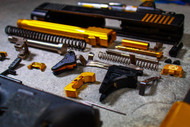
Glock Cleaning & Lubrication
Posted by The Dirty Glock on Sep 28th 2026
Glock Cleaning & Lubrication
How clean a Glock actually needs to be, where the oil belongs, where it absolutely doesn't, what we watch on carry and competition guns, and the maintenance mistakes that create more problems than they solve.
IronKells Armory | Glock | Maintenance & Tools
A Glock does not need to be spotless to run.
It also isn't magically immune to dirt, dried oil, carbon, lint, sand, brass shavings, old grease and every other nasty thing people manage to pack into a pistol.
We've seen guns run filthy for ridiculous round counts.
We've also seen guns start acting stupid because somebody drowned the striker channel in oil, let an optic screw interfere with the extractor, filled a magazine with grit, or ran a highly tuned setup until carbon ate up the little reliability margin it had left.
The goal isn't to make the gun look new after every range trip.
The goal is to keep friction, fouling and corrosion from becoming part of the malfunction.
“Clean enough. Lubed where it matters. Dry where it matters. Then go shoot.”
The Fast Summary
Glocks don't need much oil. A light film and a few correctly placed drops beat soaking the entire gun.
Keep the striker channel dry. Oil inside it grabs crud and can slow striker movement enough to create light primer strikes.
Keep magazines dry inside. Oil plus West Texas dirt makes some beautiful fucking sludge.
Don't forget the connector. The trigger-bar/connector contact point is one of the most overlooked Glock lubrication points.
Carry guns need inspection even when they haven't been fired. Sweat, lint, dust and corrosion don't care about your round count.
Tuned, suppressed and compensated guns deserve more attention. They generally accumulate more shit or have less room for additional friction.
Don't detail-strip the gun every time you shoot it. Routine field-strip maintenance handles the vast majority of normal cleaning.
How Often Should You Actually Clean a Glock?
Glock's current guidance is conservative: clean and lubricate before first use, after firing, periodically even if it hasn't been fired, and after exposure to rain, sweat, dirt, dust, salt water or other nasty conditions.
Real life is a little less ceremonial.
We're not pretending a Glock needs a full cleaning because somebody fired 50 rounds through it on a clean indoor range.
What matters more to us is:
- How many rounds have actually gone through it
- Whether it's a stock or tuned setup
- Whether it's carried against the body
- Whether it has been exposed to dirt, sand or moisture
- Whether it's suppressed
- Whether it has started feeling sluggish
- Whether we're already opening it up for inspection
Clean based on the gun's job and condition — not because the internet gave you some sacred round count.
Different Guns Need Different Maintenance Habits
| Setup | What We Care About |
|---|---|
| Stock range gun | Basic field-strip cleaning, proper lubrication, visual wear inspection. These guns can go a long time without drama. |
| Carry gun | Lint, sweat, corrosion, dry rails, optic hardware, magazine condition. Round count isn't the only concern. |
| Competition gun | Trigger system, recoil spring condition, mag springs, comp fouling and anything tuned close to the edge. |
| Suppressed gun | Heavy fouling, chamber condition, booster/barrel setup, rails and reduced reliability margin as carbon builds. |
| Compensated gun | Comp carbon, locking hardware, barrel threads and recoil-system behavior. |
Routine Cleaning Means Field Strip — Not Full Autopsy
For normal cleaning, field-strip the pistol into the normal major components:
- Frame
- Slide
- Barrel
- Recoil spring assembly
- Magazine separately when it actually needs cleaning
You do not need to pull every pin, spring, striker, extractor and trigger component out every time you burn a box of ammo.
Detail stripping has a place:
- Heavy round count
- Known contamination
- Striker or extractor problems
- Trigger work
- Parts inspection
- Something clearly isn't moving correctly
Taking a gun apart farther than necessary creates more opportunities to lose, damage or incorrectly reinstall something.
1. Barrel & Chamber
The chamber matters more to reliability than whether the bore looks pretty under a flashlight.
We clean:
- Chamber
- Bore
- Feed-ramp area
- Barrel hood
- Locking surfaces / lug area
- Outside of the barrel where it rides against the slide
A nylon or bronze bore brush, patches and normal firearm cleaner are enough for most of what we're doing.
We aren't trying to polish the barrel into jewelry.
Carbon buildup around the chamber or feed area matters more than a couple cosmetic marks.
Before firing, the bore should not be sitting full of oil.
2. Slide
The slide is where a lot of useful diagnostic dirt lives.
We pay attention to:
- Slide rail cuts
- Breech face
- Under the extractor claw
- Inside top of the slide where the barrel hood rubs
- Front barrel opening
- Visible unusual wear
- Optic hardware if equipped
A nylon brush gets most of it.
Cotton swabs are useful around little corners, but don't leave cotton fibers packed inside the gun and call that cleaner.
The breech face gets cleaned — then wiped dry.
Do not oil the striker channel. This is one of the easiest ways to turn an otherwise reliable Glock into a light-strike machine. Oil collects powder residue, carbon and lint. The striker assembly and channel are meant to stay dry.
3. When the Striker Channel Actually Needs Attention
We don't tear the striker assembly out after every range trip.
We start caring about the striker channel when:
- Light primer strikes appear
- Oil or solvent accidentally got inside
- The slide has seen very high round count
- There's obvious contamination
- The striker isn't moving freely
When it is cleaned, the final result should be dry.
No oil bath. No grease. No “just one drop for good luck.”
4. Frame
Most of the polymer frame needs cleaning more than it needs lubrication.
Brush or wipe out:
- Loose carbon
- Dust and lint
- Unburned powder
- Brass flakes
- Any obvious debris around the trigger mechanism
- Crud around the slide-stop lever
We don't hose the entire trigger mechanism down with oil.
The one little Glock lubrication point everybody forgets is at the rear of the trigger bar where it meets the connector.
5. Don't Forget the Connector
The rear of the trigger bar rides against the connector every time you press the trigger.
A tiny drop where those surfaces meet matters.
This is especially noticeable on tuned trigger setups because a dry or filthy connector interface can make a good trigger suddenly feel heavier or rougher than it should.
You don't need to drown it.
One small drop in the correct place does more good than spraying the whole frame like you're seasoning a cast-iron skillet.
6. Recoil Spring Assembly
The recoil spring assembly does not need to swim in oil.
We wipe loose fouling off and inspect it.
Things we're looking for:
- Bent guide rod
- Damaged end caps
- Kinked spring
- Unusual rubbing
- Loose hardware on aftermarket serviceable guide rods
- Noticeable loss of spring performance on tunable competition systems
If you're running tunable springs, this is also where keeping track of spring age becomes useful.
7. Magazines: Clean & Dry
If your magazines spend their lives bouncing off concrete or landing in dirt, they eventually need cleaning too.
Inside we look for:
- Sand
- Dust
- Mud
- Brass shavings
- Sticky follower movement
- Spring corrosion
- Cracked or damaged follower
Then we put them back together dry inside.
Oil in the mag body attracts dirt and can contaminate cartridges.
For deeper magazine diagnosis, see the Glock Magazine Troubleshooting Guide .
Where We Actually Lubricate
| Area | How We Treat It |
|---|---|
| Outside of barrel | Very light film on the moving/contact surfaces. |
| Barrel hood | Light film where it contacts the slide. |
| Barrel lug / locking surfaces | Light lubrication on actual friction points. |
| Inside top of slide where barrel hood rubs | Light film. |
| Front barrel opening in slide | Very light film where the barrel moves through the slide. |
| Slide rail cuts | Small amount spread along the rail contact surfaces. |
| Trigger bar / connector contact | One small drop. Easy to forget and actually important. |
If oil is pouring out of the frame and running down your hands, congratulations — you found too much.
Where We Do NOT Want Oil
- Inside the striker / firing-pin channel
- On the breech face
- Inside the magazine tube
- All over cartridges or primers
- Pooled inside the trigger mechanism
- Standing inside the chamber or bore before firing
These areas aren't improved by being wet.
Some of them can become genuine reliability problems when they're wet.
Over-Lubrication Is a Real Thing
More oil does not equal more reliability.
Excess lubricant becomes a dirt magnet.
It grabs:
- Unburned powder
- Carbon
- Lint
- Sand
- Dust
- Whatever shit was already inside your holster
On a clean range gun you may get away with it.
On a carry gun riding around West Texas every day, you've basically built flypaper inside your pistol.
Use enough oil to lubricate the surfaces. That's it.
Gun Oil, CLP, Grease — Does the Brand Matter?
Not nearly as much as people want it to.
A decent firearm lubricant used correctly is more important than arguing online about which bottle has the coolest label.
We care about:
- It actually lubricates
- It doesn't attack finishes, polymer or optics
- It doesn't gum up quickly
- It stays where we need it long enough to matter
- We don't use twelve times more than necessary
CLP is convenient because one product can handle normal cleaning and lubrication.
Dedicated cleaner plus dedicated oil works too.
A tiny amount of grease can work on high-friction surfaces, but we generally don't see a reason to pack a Glock with it.
Correct location and amount beat brand worship.
That Copper-Colored Shit in a Brand-New Glock
Leave it alone.
The copper-colored material you may see inside a new Glock is factory-applied long-term lubricant.
It's not rust.
It's not packing grease that needs to be scrubbed out before the first shot.
Clean normally around it and let normal use work it in.
Carry Guns Get Dirty Without Being Fired
People obsess over round count and forget the gun has been strapped against a sweaty human body for six months.
Carry guns collect:
- Shirt lint
- Skin oil
- Sweat
- Dust
- Hair
- Dead skin
- Whatever else lives in your waistband apparently
We'd rather inspect a carry gun regularly and find nothing than discover corrosion or a packed-up optic lens when we actually need it.
Carry maintenance is as much inspection as cleaning.
Suppressed Glocks Get Nasty Faster
Suppressed pistols generally throw a lot more crud back into the gun.
If a pistol:
- Runs great clean
- Starts getting sluggish after a few suppressed magazines
- Goes right back to normal after cleaning
don't ignore that pattern.
The gun may simply have less reliability margin once fouling starts stacking up.
Chamber, rails, barrel fit, recoil system and suppressor booster condition all matter.
Compensators Get Filthy Too
A compensator is literally sitting in front of hot dirty muzzle gas.
Carbon builds in:
- Ports
- Expansion chambers
- Locking mechanisms
- Thread interfaces
- Set-screw areas
We've seen comps carbon-lock themselves to barrels badly enough that removal became a project.
Inspect the mounting hardware while you're already cleaning the gun.
For the bigger tuning picture, see the Glock Compensator Guide .
Optic-Equipped Guns: Cleaning Is Also a Hardware Check
While the gun is already on the bench, look at the optic.
Check:
- Witness marks
- Plate movement
- Loose screws
- Cracked hardware
- Lens contamination
- Battery compartment condition
For mounting problems, see Glock Optic Mounting Problems .
Cleaning Time Is Inspection Time
Cleaning is when we notice shit before it turns into a malfunction.
While the pistol is apart, we look at:
- Barrel hood and locking surfaces
- Feed-ramp/chamber condition
- Extractor claw
- Ejector
- Slide rails
- Recoil spring assembly
- Slide-stop lever
- Magazine catch
- Trigger safety
- Connector / trigger-bar wear
- Optic and sights
- Compensator / threaded-barrel hardware
You're already holding the parts in your hands. Look at them.
Wear Marks Don't Automatically Mean Something Is Wrong
A gun with thousands of rounds through it is going to look like a gun with thousands of rounds through it.
Normal polished contact marks on:
- Barrel hood
- Barrel lugs
- Slide rails
- Trigger-bar contact areas
are not the same thing as:
- Cracks
- Peening that keeps getting worse
- Bent parts
- Chunks missing
- Abnormal gouging
- Something suddenly rubbing where it never did before
Learn what normal wear looks like on your own gun so abnormal wear actually stands out.
You Can Overdo Cleaning Too
We don't scrub a Glock like we're trying to remove evidence from a murder scene.
More aggressive cleaning means more opportunity for:
- Finish damage
- Wrong solvent on optics or coatings
- Lost parts
- Incorrect reassembly
- Damaged screw heads
- Unnecessary detail stripping
Clean what needs cleaning. Inspect what needs inspecting. Stop there.
What We Actually Need on the Bench
- Caliber-correct bore brush
- Cleaning rod or pull-through system
- Patches
- Nylon toothbrush-style brush
- Cotton swabs
- Clean rags
- Quality firearm cleaner / CLP
- Quality firearm oil
- Small needle-tip oil bottle if you want precise drops
- Compressed air or low-pressure air when useful for completely drying inaccessible areas
- Good lighting
You don't need a $300 tactical cleaning altar to maintain a Glock.
Our Basic Cleaning Order
- Unload and verify the pistol is clear.
- Keep ammunition away from the cleaning area.
- Field-strip the pistol.
- Clean the chamber and bore.
- Clean barrel exterior and locking surfaces.
- Brush and wipe the slide rails, breech area and extractor area.
- Brush loose debris from the frame and trigger area.
- Inspect the recoil system and other visible parts.
- Clean magazines only when they actually need it — and leave them dry.
- Lubricate the actual friction points lightly.
- Leave striker channel, breech face and magazine interior dry.
- Reassemble and function-check.
Common Cleaning & Lubrication Mistakes
| Mistake | What It Can Cause |
|---|---|
| Oil in striker channel | Collected debris, sluggish striker, possible light strikes |
| Oil inside magazines | Dirt buildup, follower drag, ammunition contamination |
| Dry connector / trigger-bar interface | Rougher or heavier-feeling trigger, increased wear |
| Way too much oil everywhere | Debris accumulation and messy operation |
| Ignoring carry lint because gun hasn't been fired | Accumulated debris, corrosion, dirty optics |
| Never cleaning suppressed or compensated setup | Fouling eventually eats reliability margin |
| Aggressively detail-stripping every range trip | Unnecessary wear, lost parts, assembly mistakes |
Common Glock Cleaning Questions
Do I really need to clean my Glock after every range trip?
Glock's official guidance says to clean and lubricate after firing. In practice, a normal stock Glock can often run plenty of rounds between cleanings. We base our maintenance on the gun's use, condition and job rather than pretending 50 clean rounds turned it into a coal mine.
How much oil does a Glock need?
Not much. Light films on moving barrel surfaces, small amounts on the rails and a small drop at the trigger-bar/connector contact point are plenty. Glock specifically warns against excessive lubrication.
Should the striker be oiled?
No. Keep the striker/firing-pin channel clean and dry.
Should I oil Glock magazines?
We don't. We clean magazine bodies, springs and followers when needed and put them back together dry.
Should I remove the copper grease from a new Glock?
No. That copper-colored material is factory-applied long-term lubricant. Let normal use work it in.
Does a Glock run better wet?
Not in our experience. It needs lubrication at the contact points, not a swimming pool inside the slide.
Why did my trigger suddenly feel heavier after a lot of shooting?
One easy thing to check is the trigger-bar/connector interface. A dry or filthy contact point can make the trigger feel worse. Trigger-system wear or other problems can also contribute.
Why does my Glock run clean but malfunction when dirty?
That usually tells us the setup doesn't have much spare operating margin. Tuned recoil springs, tight barrels, compensators, suppressors and aftermarket trigger systems can all make extra friction more noticeable.
Related Forge Files
Glock Failure to Feed
Feeding problems caused or exposed by fouling, magazines, ammunition and modified setups.
Glock Failure to Return to Battery
Fouling, chamber condition, recoil-system drag and other resistance that can stop the slide short.
Glock Magazine Troubleshooting
Magazine cleaning, follower drag, springs, extensions and feeding problems.
Glock Compensator Guide
Comp fouling, mounting hardware, spring tuning and reliability.
Glock Optic Mounting Problems
Optic screws, plate fit, hardware inspection and extractor interference.
Glock Light Primer Strikes
Striker channels, striker springs, contamination, primers and ignition troubleshooting.
Bottom Line
A Glock does not need to be spotless.
It needs to be maintained intelligently.
Clean the chamber.
Keep moving surfaces lubricated.
Keep the striker channel dry.
Keep magazines clean and dry.
Don't forget the connector.
Use cleaning time to inspect the gun.
Then stop polishing the damn thing and go shoot it.
Clean What Matters. Oil What Moves.
A Glock doesn't need a bath. It needs the right maintenance in the right places.
Glock Forge Files Shop GlockSource List / Receipts
This guide combines real-world Glock maintenance habits, shop and shooter experience, current Glock owner guidance and older Glock armorer information that remains useful for understanding lubrication points.
| ID | Source | Used For |
|---|---|---|
| S1 | GLOCK — Caring for Your GLOCK | Maintenance frequency, exposure to adverse conditions and over-lubrication guidance |
| S2 | GLOCK Owner's Manual — Preventive Maintenance | Field stripping, barrel/slide cleaning, lubrication points, dry breech face and striker channel |
| S3 | GLOCK Armorer Maintenance Material | Connector lubrication, slide rails, copper-colored factory lubricant and minimum-oil approach |
| S4 | IronKells / Shooter Experience | Carry-gun lint, suppressed fouling, tuned-gun maintenance, magazine cleaning and practical inspection habits |
IRONKELLS ARMORY | FORGE FILES
Receipts Over Rumors.
Keep it clean enough. Keep it lubed right. Make the gun earn its reputation.