Hard Primers = Bad Ammo
Posted by Mr. GunBusters on Sep 29th 2026
IronKells Armory | GunBusters
Hard Primers = Bad Ammo
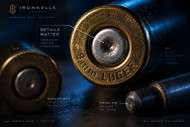
A round goes click. You eject it. There's a little dent in the primer. The internet immediately blames “hard primers.” Sometimes primer sensitivity really is part of the story. But light strikes are an ignition-system problem first — and ammunition is only one piece of that system.
Verdict
MOSTLY BUSTED.
Primers do vary in sensitivity, construction and intended application. A firearm with marginal ignition energy may reliably fire one ammunition type while struggling with another. That does not automatically make the tougher primer defective. Light strikes can also come from reduced-power springs, contamination, firing-pin drag, incomplete battery, damaged parts, ammunition assembly issues or an actual defective cartridge.
The Claim
“If the primer has a dent and the round didn't fire, the ammo has hard or bad primers.”
That's one of the fastest diagnoses you'll hear at a range.
Click.
Eject round.
Look at dent.
Blame ammo.
Problem solved.
Except nothing has actually been diagnosed yet.
What the Primer Is Actually Doing
The primer is the first ignition component in a centerfire cartridge.
Inside that tiny cup is an impact-sensitive priming system designed to create the heat and flame needed to ignite the main propellant charge.
Trigger → hammer / striker → firing pin → primer → propellant → projectile
If the cartridge doesn't fire, something in that chain failed to do its job correctly.
The primer may be the failed component.
But the primer may also have received an inadequate strike from an otherwise perfectly good cartridge.
That distinction is the entire point of this GunBuster.
First: “Hard Primer” Is Usually Sloppy Language
Shooters use hard primer as a catch-all term.
But several different characteristics can influence how easily a primer ignites:
- Primer sensitivity
- Cup material and strength
- Cup thickness
- Anvil geometry
- Primer composition
- How the primer is supported in the cartridge
- The firearm's firing-pin geometry and impact energy
A primer that requires more impact energy is not necessarily poorly manufactured.
It may simply be designed around a different sensitivity window.
So throughout this article, when we say hard primer, what we really mean is a primer that your particular ignition system finds more difficult to ignite.
Primer Sensitivity Is a Real, Measurable Thing
This isn't just shooters arguing over whether Brand A “feels softer” than Brand B.
Primer sensitivity is something the ammunition industry actually tests.
SAAMI defines primer sensitivity testing using controlled firing-pin impacts to evaluate how readily a primer initiates.
That alone tells us something important:
primer sensitivity is an engineered characteristic.
Federal even advertises primer sensitivity as a performance feature in some of its match ammunition.
On the other end of the spectrum, military-style ammunition and primer systems may intentionally use sensitivity specifications designed to provide additional resistance to unintended initiation in firearms with floating firing pins.
Different sensitivity does not automatically mean different quality.
Why Would Anybody Want a Less-Sensitive Primer?
Because the easiest primer in the world to ignite is not automatically the ideal primer for every firearm.
Some military-style semiautomatic rifles use free-floating firing pins.
As the bolt closes, the firing pin can have a small amount of inertial movement.
Military primer specifications can therefore place greater emphasis on avoiding unintended ignition from incidental firing-pin contact.
That's not a defect.
It's a design priority.
Put that same primer behind a very lightly sprung competition ignition system and the shooter may suddenly call it “too hard.” The primer didn't necessarily change. The firearm's ignition margin did.
Cause #1: Not Enough Ignition Energy
This is the first thing we think about when light strikes show up after trigger work.
The firing pin or striker needs enough energy to reliably initiate the primer.
That energy comes from the firearm's ignition system:
- Hammer or striker spring
- Firing-pin / striker mass
- Available travel
- Friction inside the system
- How completely the firearm is in battery
Reduce spring power and you reduce some of the reserve energy available for ignition.
That does not guarantee misfires.
We've run light competition setups successfully.
But there is a point where the system becomes ammunition-sensitive.
Maybe Federal runs perfectly.
Maybe another commercial load runs perfectly.
Then a tougher-primer NATO-style load starts clicking.
That doesn't automatically prove the NATO ammunition is bad.
It may prove that you tuned away enough ignition margin that primer sensitivity now matters.
Reduced-Power Striker Springs Come With a Trade-Off
Reduced-power hammer and striker springs can help reduce trigger pull in certain systems.
But they also reduce ignition energy.
Spring manufacturers themselves warn that reduced-power hammer or striker springs can compromise reliability in some setups.
That's exactly the trade-off we've been talking about in the Glock Trigger Upgrade and Light Triggers GunBuster articles.
A lighter trigger isn't automatically unsafe. But every modification still has to be evaluated as part of the entire system.
We've Seen This Exact Thing in Tuned Glocks
This isn't only theory for us.
We've seen Glock trigger setups run flawlessly with one ammunition type and then start showing light strikes with tougher-primer ammunition after striker-spring changes.
Return the ignition system closer to factory strength and the problem disappears.
That does not mean the first ammunition suddenly became better quality.
And it does not mean the second ammunition was junk.
It means:
the modified gun had less ignition margin.
That's one reason we're much more conservative with ignition-system changes on carry guns than on purpose-built competition guns.
Cause #2: Dirt, Oil or Drag in the Firing-Pin System
A powerful spring doesn't help much if the striker is dragging through sludge.
Carbon.
Oil.
Old cleaner residue.
Metal debris.
Lint.
Any of that can increase resistance inside an ignition system.
Glock specifically instructs owners not to put lubricant or gun oil inside the firing-pin channel.
Lubricant around the breech face and firing-pin system can also contaminate ammunition and contribute to failures.
This is one of those situations where more oil is absolutely not more reliability.
If a gun suddenly develops weak-looking primer strikes after a heavy cleaning or over-lubrication session, don't immediately start cursing the ammunition.
Cause #3: The Gun Isn't Fully in Battery
A light strike can actually be a symptom of a completely different malfunction.
If a semiautomatic pistol is slightly out of battery, the firing system may not operate with normal geometry or full energy.
Why might the slide not be fully forward?
- Dirty chamber
- Out-of-spec cartridge
- Carbon buildup
- Improperly fitted barrel or slide
- Extractor interference
- Optic screw interference on certain setups
- Recoil-spring problems
- Trigger-system drag
Now the round gets a shallow-looking primer mark.
Shooter says:
“Hard primer.”
But the actual problem happened before the striker ever reached the primer.
Primer appearance is evidence — not a diagnosis.
Cause #4: Firing-Pin or Striker Problems
The spring isn't the only part doing work.
A firing pin or striker can develop:
- Damage at the tip
- Peening
- Burrs
- Abnormal wear
- Drag against surrounding components
- Incorrect protrusion or travel because of mismatched aftermarket parts
A lightened aftermarket striker can also change the energy equation.
Lower mass can have advantages in a competition system.
But spring force, striker mass, travel and primer sensitivity still have to work together.
Swap enough parts and you aren't troubleshooting “a Glock” anymore. You're troubleshooting the system you built.
Cause #5: Primer Seating & Ammunition Assembly
This matters most when handloaded or remanufactured ammunition enters the picture.
A primer that is not seated correctly may behave differently under the first firing-pin strike.
Instead of the strike producing normal ignition, some of that movement may be spent shifting the primer deeper into its pocket.
That can create the classic:
click on the first strike, bang on a later strike.
For actual handloading procedures, use the component and reloading-manual instructions appropriate to the cartridge rather than copying random internet numbers.
For diagnosis, the useful point is simple: improper primer seating can imitate a “hard primer” problem.
What Does It Mean If the Round Fires on a Second Strike?
It tells you the first strike did not create ignition.
That's useful information.
It does not automatically prove the primer was too hard.
Possible explanations still include:
- Marginal firing-pin energy
- Primer not originally seated as intended
- Firearm not fully in battery on the first attempt
- Intermittent firing-pin drag
- Actual ammunition defect
A second-strike ignition is another clue. Treat it like a clue, not a verdict.
Cause #6: Contaminated Ammunition
Primers and propellant do not benefit from being soaked in cleaning chemicals.
Oil and solvent around ammunition can create ignition problems.
That's why we don't:
- Spray oil onto loaded magazines
- Drench the breech face
- Store ammunition in oily containers
- Assume contaminated ammunition is fine because the cartridge still looks normal
If ammunition has been exposed to questionable chemicals, moisture or storage conditions, that belongs in the diagnosis.
And Yes — Ammo Can Actually Be Bad
We don't want to overcorrect one myth and create another.
Primers are manufactured components.
Manufactured components can be defective.
Ammunition can also be:
- Improperly assembled
- Contaminated
- Damaged
- Stored badly
- Part of a defective lot
So when do we start taking the ammunition itself more seriously as the culprit?
When the same lot starts producing failures across multiple healthy, factory-spec firearms.
Or when the firearm runs other ammunition normally and the suspect ammunition shows a repeatable abnormal pattern.
That's troubleshooting instead of blindly blaming either side.
Primer Appearance Can Lie to You Too
Shooters love reading primers like tea leaves.
Deep dent.
Shallow dent.
Flat primer.
Cratered primer.
Sometimes those observations are useful.
But primer cup construction differs.
Firing-pin-tip shape differs.
Firing-pin-hole dimensions differ.
Pressure differs.
Headspace and lockup matter.
Primer appearance is one diagnostic clue. Don't build an entire diagnosis around one photograph.
The Best Control: Move Back Toward Known-Good
If light strikes appear after modifications, one of the fastest ways to learn something is to remove variables.
If practical, compare the problem against the firearm's known-good or factory configuration.
If the gun:
fails with reduced-power ignition parts
but:
runs the same ammunition normally after the ignition system is restored
you've learned something important.
The ammunition did not magically become softer.
Your ignition margin changed.
Cross-Testing Ammunition Is Useful — If You Interpret It Correctly
Trying more than one reputable factory load can tell you a lot.
| Ammo | Result in Modified Gun |
|---|---|
| Load A | 100% ignition |
| Load B | 100% ignition |
| Load C | Repeated light strikes |
You have discovered ammunition sensitivity in the setup.
But you have not yet proven Load C is defective.
Run the same ammunition through a healthy factory-spec control firearm.
If it works there, the modified gun is running on thinner ignition margin.
If the ammunition starts failing across multiple known-good guns, suspicion moves toward the ammunition.
That's how you separate patterns from opinions.
Competition vs. Carry: How Much Ignition Margin Do You Want?
| Consideration | Competition | Carry / Duty |
|---|---|---|
| Ammo Control | Shooter often controls exact ammunition choice | Reliability margin matters more than shaving trigger weight |
| Spring Tuning | Can be aggressive if the complete setup is proven | We prefer more conservative ignition energy |
| Primer Sensitivity | Can be part of controlled ammunition selection | Gun should not live on razor-thin ignition margin |
| Failure Cost | Lost stage / match performance | Potentially much more serious |
A competition shooter may intentionally build around a particular ammunition and primer combination.
That's a controlled system.
For a defensive gun, we'd rather have healthy excess ignition energy than a trigger that's two ounces lighter.
The gun needs to go bang when everything isn't perfect.
Sensitive Doesn't Mean “Good.” Tough Doesn't Mean “Bad.”
This is the language problem at the center of the myth.
People talk about primers like this:
Soft = good.
Hard = bad.
But primer manufacturers may have different goals.
A highly sensitive primer can be useful where reliable ignition from a lighter competition setup matters.
A less-sensitive primer may make sense where resistance to incidental firing-pin contact is important.
Both can be high-quality components.
They just aren't necessarily optimized around the same application.
The IronKells Light-Strike Diagnostic Order
Don't start ordering random parts.
Don't immediately trash the ammo.
Work the problem in an order that removes variables.
1. Look at what changed.
New trigger? New springs? New striker? New optic? New barrel? New ammunition? Problem appeared after cleaning?
2. Check battery and overall function.
Make sure the gun is actually returning completely to its normal firing condition.
3. Inspect and clean the ignition system according to the manufacturer.
A striker or firing-pin channel that should be dry should actually be clean and dry.
4. Inspect the striker / firing pin and associated parts.
Look for damage, abnormal wear or interference.
5. Compare against known-good / factory configuration when possible.
Especially if reduced-power ignition parts were installed.
6. Cross-test reputable factory ammunition.
Look for a repeatable pattern instead of one random failure.
7. If handloads or remanufactured ammo are involved, evaluate ammunition assembly too.
Primer seating and component condition matter.
8. Look at the pattern across firearms.
If the same ammo fails in multiple healthy guns, the ammunition becomes a much stronger suspect.
9. Don't trust a defensive gun with marginal ignition.
If it only runs one unusually sensitive primer type, we'd rather restore ignition margin than pretend the problem is solved.
What the Pattern May Be Telling You
| Pattern | Where We Look First |
|---|---|
| Light strikes started immediately after reduced-power striker spring | Ignition energy / spring setup |
| Gun ran before cleaning, now gets intermittent light strikes | Firing-pin channel contamination or improper lubrication |
| Primer dent is shallow and slide sometimes looks slightly out of battery | Return-to-battery problem before blaming primer sensitivity |
| One ammo type fails only in aggressively tuned gun but runs in stock gun | Modified gun's ignition margin |
| Same ammunition lot fails in several healthy guns | Ammunition / lot problem becomes much more likely |
| Handloaded ammo sometimes fires on later strike | Evaluate ammunition assembly and primer seating as well as firearm energy |
| Failures appear after gun gets dirty | Ignition margin may be too thin for real-world contamination |
Don't “Fix” a Marginal Carry Gun by Hunting for the Easiest Primer
For a competition gun, controlled variables are part of the game.
If you've built a race gun around one known ammunition setup and tested the hell out of it, that's one thing.
A defensive gun is different.
We don't love a carry pistol that works only because we found the easiest primer it can ignite.
We'd rather have:
- Healthy striker / hammer energy
- Clean ignition system
- Correct battery
- Properly functioning parts
- Ammunition compatibility proven by live fire
- Enough margin for heat, cold, dirt and normal service wear
A defensive gun should not need perfect laboratory conditions to make primers work.
Myth vs. Reality
| Myth | Reality |
|---|---|
| A light primer dent proves bad ammo. | It proves ignition didn't occur. Firearm energy, battery, contamination, part condition and ammunition all remain possible causes. |
| Hard primers are low-quality primers. | Different sensitivity levels can be deliberate engineering choices for different firearm applications. |
| If one brand works and another doesn't, the second brand is junk. | A tuned firearm may have enough ignition energy for a sensitive primer but not enough margin for a tougher one. |
| Reduced-power striker springs only change trigger feel. | They can also reduce ignition energy and reliability margin. |
| More oil makes the striker run better. | Some firing-pin systems are intended to run dry; excess lubricant can create drag or contaminate ammunition. |
| If it fires on a second strike, the primer was definitely hard. | Second-strike ignition can have several causes and does not identify one by itself. |
| Ammo is never the problem. | Defective, contaminated or improperly assembled ammunition can absolutely fail. Diagnose the pattern. |
| Primer appearance alone tells you everything. | Cup construction, firearm geometry and pressure can all affect primer appearance. |
What We're Updating From the Original Forge File
The original article's overall diagnosis was strong, so most of its substance stays.
A few things are being cleaned up:
- We're not saying true primer defects basically never happen.
- We're separating primer sensitivity from the vague phrase “hard cup.”
- We're not turning the article into a primer-seating or handloading tutorial.
- We're treating a second-strike ignition as evidence, not proof of one specific cause.
- We're not telling shooters to solve marginal defensive ignition by simply shopping for the softest primer available.
- We're giving incomplete battery more attention because it can masquerade as a primer problem.
The core IronKells point remains exactly the same: diagnose the whole ignition system before blaming one component.
Related Forge Files
Glock Light Primer Strikes
The full Glock-specific technical diagnostic covering striker springs, striker channels, battery, trigger work, ammunition and ignition failures.
Glock Trigger Upgrade Guide
How striker springs, trigger parts and competition tuning can change the ignition system.
Glock Failure to Return to Battery
Chamber fit, recoil systems, extractor interference, trigger drag and other conditions that can mimic an ignition problem.
Glock Ammo Matchmaking
Matching ammunition, recoil system, compensators and reliability to the complete pistol.
GunBusters: Light Triggers Are Unsafe
Why lighter triggers, reduced ignition margin and mechanically unsafe trigger geometry are three different subjects.
Bottom Line
Harder-to-ignite primers exist.
More-sensitive primers exist.
Neither label automatically means good or bad.
If your gun starts clicking on certain ammunition, ask why.
Did you install a lighter striker spring?
Is the firing-pin channel dirty or oily?
Is the gun completely in battery?
Is the striker damaged?
Did the problem start after a modification?
Does the ammunition fail in other known-good guns?
Is the ammunition contaminated or otherwise suspect?
Those questions get you somewhere.
Looking at one dent and yelling:
“JUNK PRIMERS!”
doesn't.
A reliable firearm should have enough ignition margin to run the ammunition appropriate for its job. Fix the margin, prove the setup, and let the evidence tell you whether the ammo is actually bad.
Sources & Receipts
| Source | Used For |
|---|---|
| Original IronKells Forge File — Hard Primers = Bad Ammo | Original myth framing, primer-sensitivity discussion, reduced-power springs, striker-channel problems, ammunition cross-testing, competition-vs-carry philosophy and IronKells experience. |
| SAAMI — Sporting Ammunition Primers / Primer Sensitivity Standards | Primer construction, primer function, industry sensitivity testing and dimensional standards. |
| GLOCK — Current Instructions for Use | Firing-pin-channel lubrication warning, breech-face cleanliness and ammunition-contamination guidance. |
| Wolff Gunsprings — Firearms Safety Guidance | Warning that reduced-power hammer or striker springs may compromise firearm reliability. |
| Federal Premium — Gold Medal Ammunition Technical Material | Example of primer sensitivity being intentionally engineered and marketed as a performance characteristic. |
| IronKells / Shooter & Builder Experience | Tuned Glock ignition systems, Federal versus tougher-primer ammunition behavior, reduced-power striker springs, carry-gun margins and practical troubleshooting. |
IRONKELLS ARMORY | GUNBUSTERS
Myth Busted.
A primer that needs a stronger hit isn't automatically bad. Sometimes it's telling you exactly how much margin your gun doesn't have.